
At 30,000 feet,
a patch that speaks for the passenger.
Seat 34K can't answer. The patch on her phone case can.
In an in-flight emergency the first thing cabin crew need is the passenger's blood type, allergies and medication. Even without internet in the cabin, one crew phone reads it.
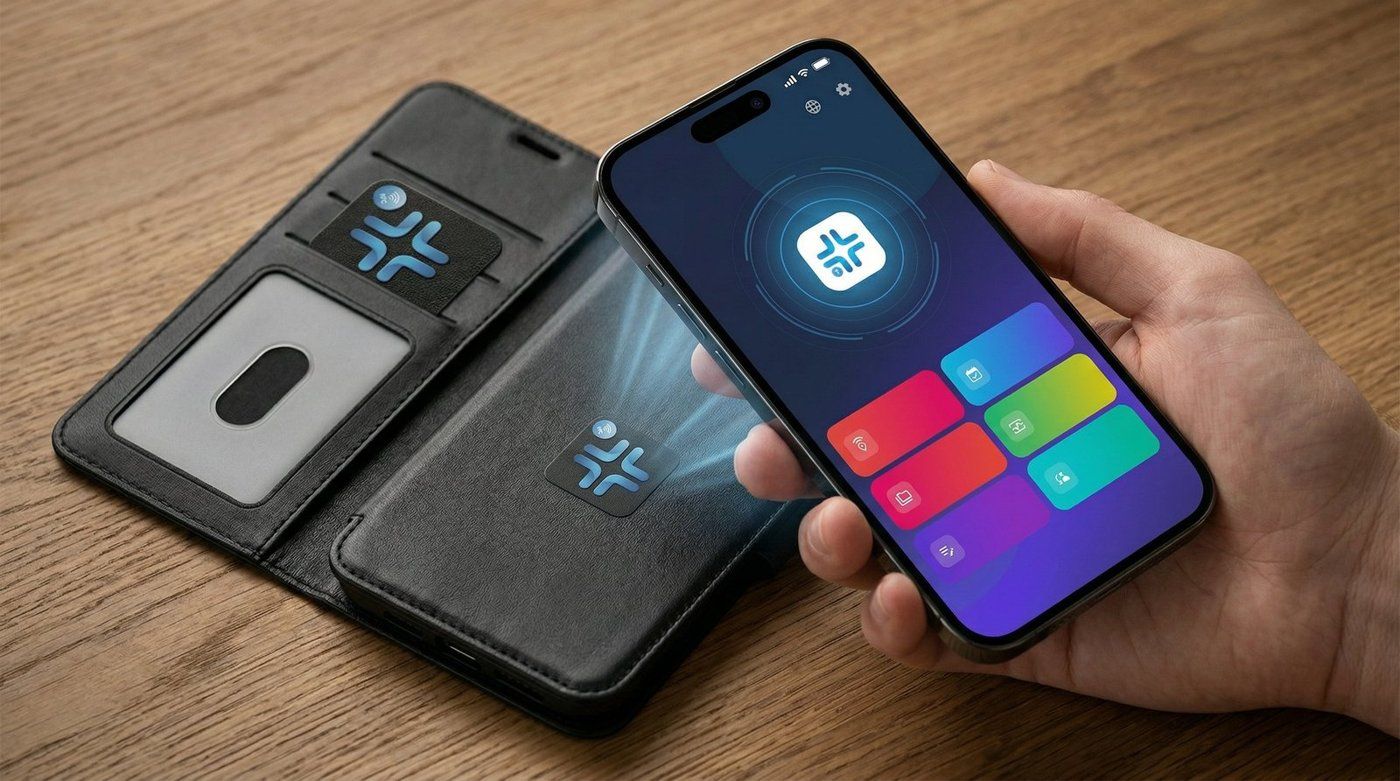
For airlines, cabin crew and frequent-flyer teams who want an in-flight emergency to start from facts, not guesses.
In the cabin, there is no one to ask
- The cabin may have no internet, so a record kept on a server or in the cloud cannot be counted on mid-flight.
- There may be no doctor on board, and a passenger flying alone may be unable to say a word, with no companion to answer for them.
- Before opening the medical kit, crew need to know allergies and medication. Whatever the passenger's phone might hold, it is locked.
- After landing, the paramedics meeting the aircraft speak another language, and the handover starts from zero again.
Incheon to Dubai, four hours after take-off
- Two days before
Sora, 67, is flying alone to see her daughter in Dubai. Her frequent-flyer gift, a patch with the airline's logo, goes on her phone case. In five minutes in the free WaveMed app she enters her blood type, her nut allergy, the adrenaline auto-injector she always carries and her daughter's number, holds the phone to the patch to save it and writes down the four-digit PIN.
- 23:55 · 34K
She boards at Incheon and settles into window seat 34K. No one on the flight knows her.
- 04:20
After the meal she struggles to breathe and begins to fade. She cannot answer the crew, and her locked phone lies on the tray table.
- 04:21
A crew member spots the blue cross on the phone case and holds a phone running 𝒱WaveMed to it for one second, still in flight mode: nut allergy, carries an adrenaline auto-injector, daughter's number. The response starts before the cabin announcement goes out.
- Landing
At the aircraft door, Dubai paramedics read the same patch in Arabic. Her daughter, whose number was on the patch, has already been called. No one had to guess her name, her allergy or who to call.
One patch, read in the cabin and again on the ground
- Readable at 30,000 feet: RadPatch, a personal emergency information patch, needs no battery, no internet and no login. One second with a smartphone shows blood type, allergies, medication, diabetes emergency information and emergency contacts. It is a close-range read of a few centimetres, unaffected by flight mode and with no effect on aircraft systems.
- Crew phones become readers: the free 𝒱WaveMed app, made for paramedics, emergency responders and fire crews, goes on crew phones. In the cabin, the crew are the first responders. It only reads, so nothing can be changed, and it shows the details in the reader's own language.
- A handover that does not start over: after landing, local paramedics read the same patch in their own language, one of 27 shown automatically. With elderly, infant and medical passengers registered in advance, in-flight response and hand-over on arrival run smoothly.
- The passenger's phone carries the rest: with or without a patch, the free WaveMed app keeps vaccination records with the lot number and certificate attached, opens the travel insurance certificate full-screen, and runs a medication schedule where each dose is marked Completed as it is taken, so a missed dose stands out even after crossing time zones. On arrival, Medicine Finder shows their medicine with its English INN, and the emergency report switches among 27 languages.
- The data stays with the passenger, the logo stays beside them: the information is encrypted in the passenger's own patch, changed only with their four-digit PIN, and never held by the airline. Your logo, meanwhile, travels every day on a phone case or a wrist.
Where passengers carry it: phone case · wrist · luggage tag
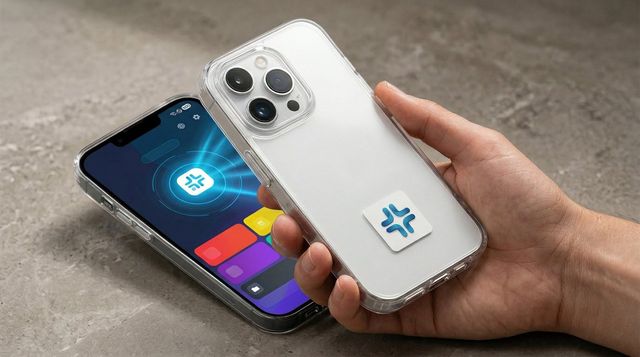
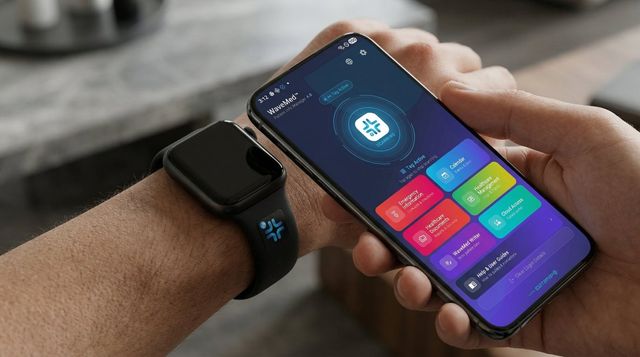
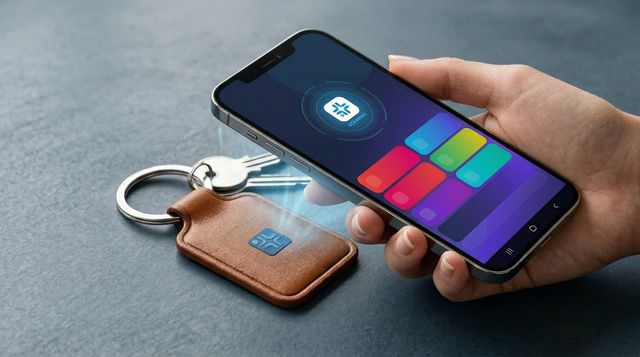
From boarding to after landing, what the passenger's phone carries
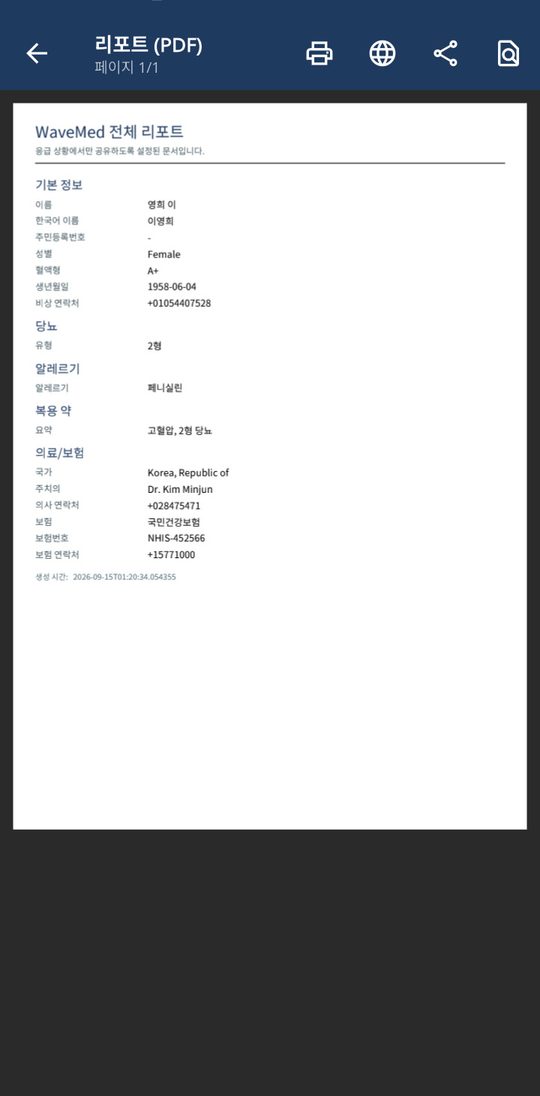
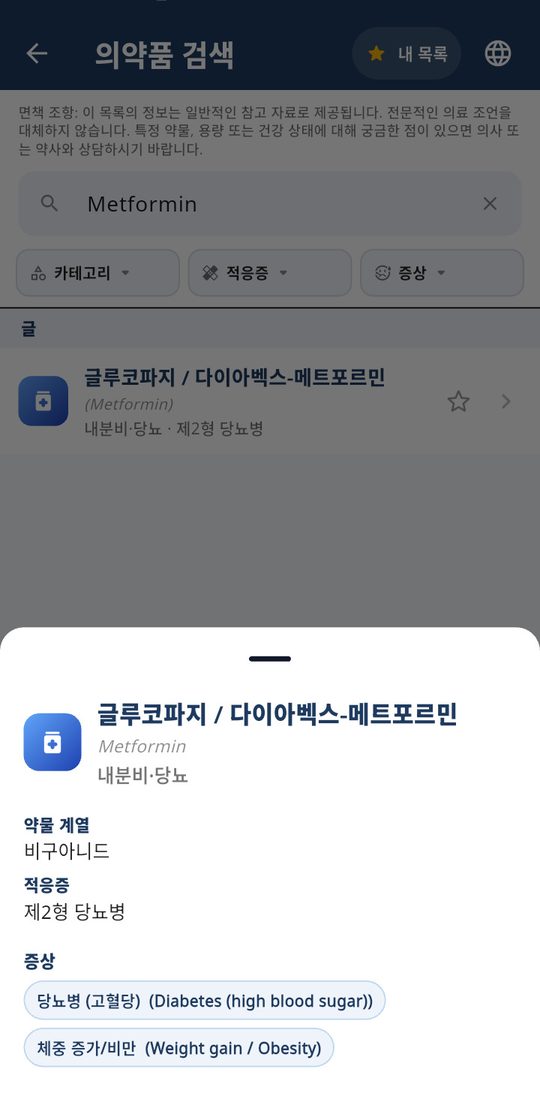
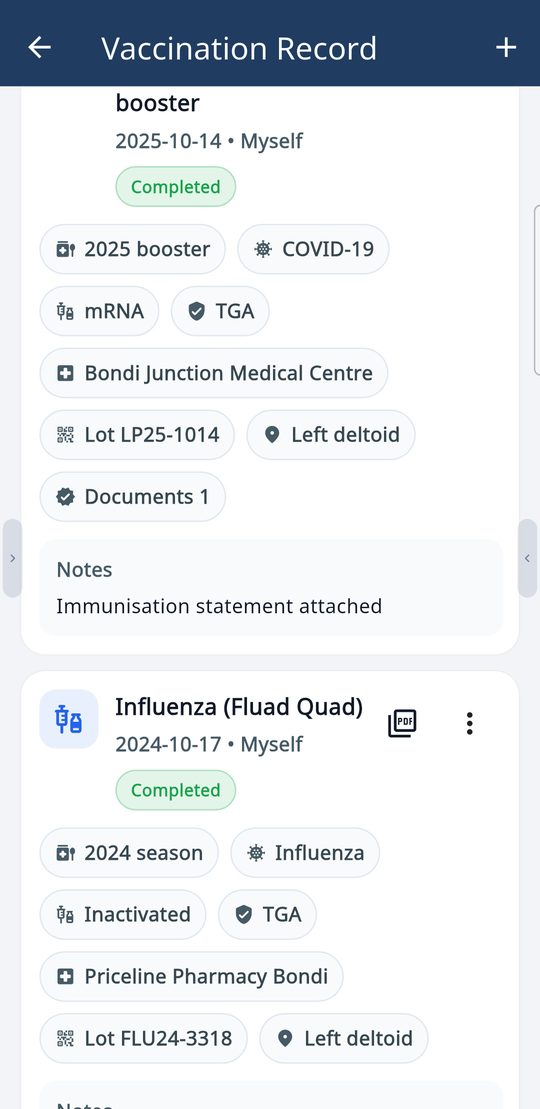
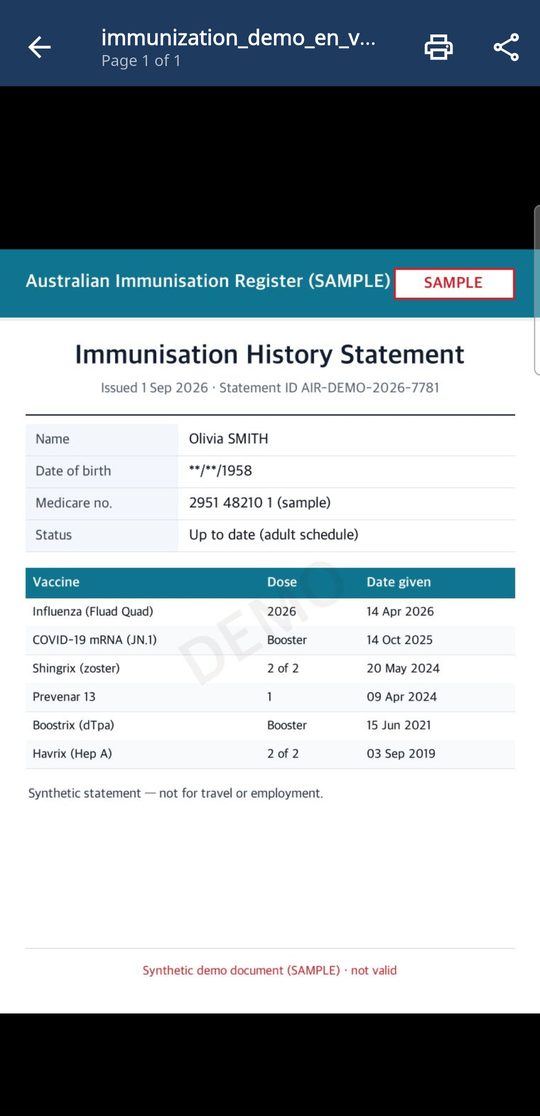
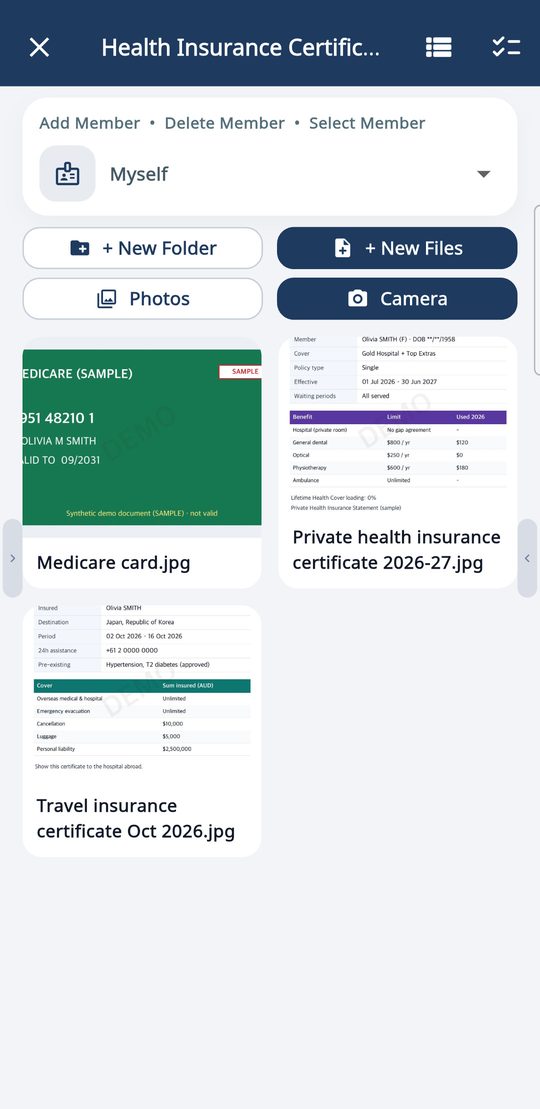
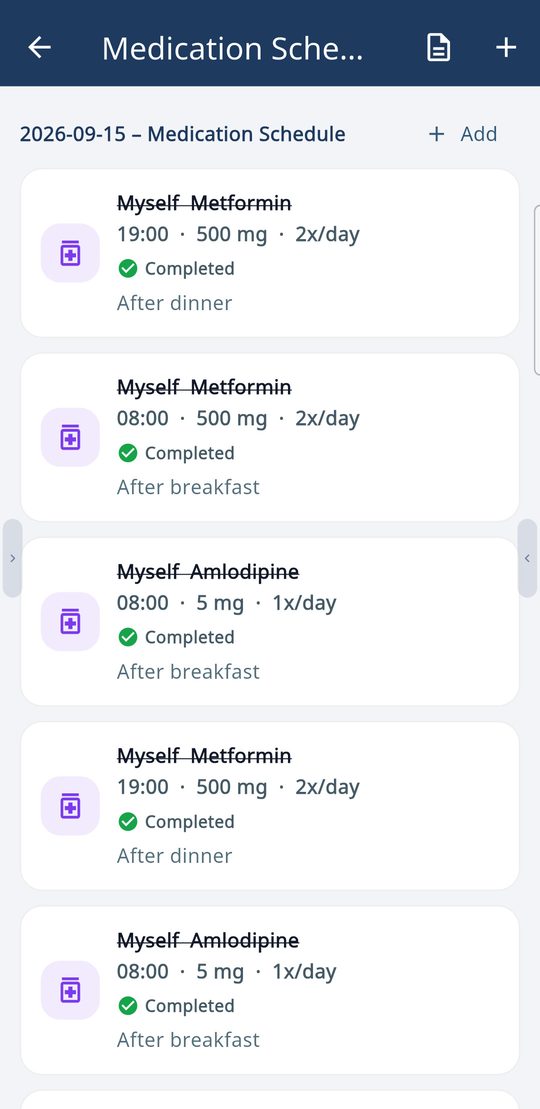
Real WaveMed app screens (demo data).
Where it is read

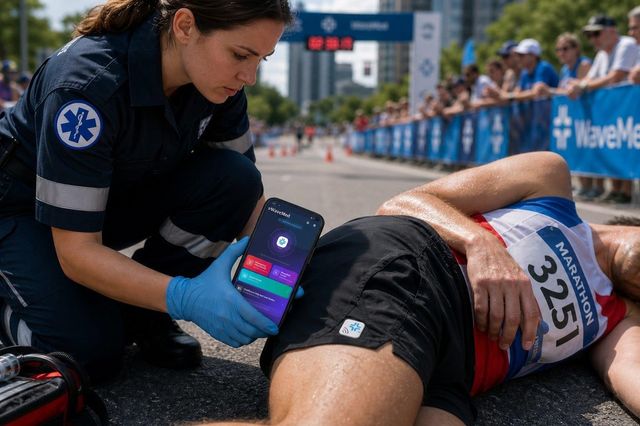
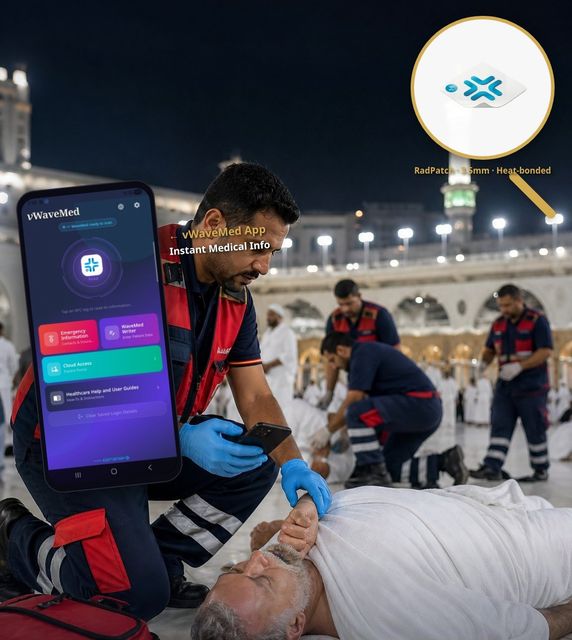
How to roll it out
- Pilot on one route: install the free 𝒱WaveMed on crew phones and give the crew twenty minutes of training.
- Path A: offer airline-logo patches as a frequent-flyer gift for top-tier members and as a small pack in the in-flight sales catalogue. Passengers install the free WaveMed app with no account, enter their own details, write the patch and keep their four-digit PIN.
- Path B: for Islamic pilgrimage and group charters, register the whole group in list order with WaveMed Desktop and a reader, with the group leader's number on every patch. Special-assistance passengers (elderly, infant and medical) are pre-registered before the flight.
- Measure in-flight response time and passenger feedback together, and let them set the scope of expansion.
Frequently asked questions
Can it be read in the cabin?
Yes. It is a close-range read of a few centimetres between phone and patch, unaffected by flight mode and with no effect on aircraft systems. No internet is needed.
Does the airline end up holding passengers' health information?
No. The information is encrypted in the passenger's own patch, not on an airline or hospital server. Passengers choose what goes in, and only they can change it with their four-digit PIN. The airline only helps with issuing patches and registering contacts.
What do crew phones need?
Any current smartphone (most Android phones on 8.0 or newer, and recent iPhones) with the free 𝒱WaveMed app. It only reads, cannot change anything, and shows the details in the reader's language.
Get the apps
Start with one route. Crew training takes twenty minutes, and your logo stays on a patch passengers carry every day.