
A patch on the helmet
arrives before the hospital does.
When a rider goes down, the helmet speaks the local language.
On Southeast Asia's roads, the first person to reach a fallen rider is usually a passer-by, not the ambulance. One second with their phone on the helmet shows blood type, medication and a family number, in their own language.

For motorcycle riders in Vietnam, Thailand and Indonesia, the delivery and ride-hail riders who spend all day on two wheels, and the tourists who rent a bike for the week.
The first person to reach you doesn't know who you are
- Most crashes happen in city alleys and on provincial roads, and the ambulance is often stuck in traffic. The first person to arrive is a passer-by.
- That passer-by cannot tell your blood type, your medication or your family's number. You are unconscious under the helmet and your phone is locked.
- A tourist on a rented bike carries nothing a local can read: the rescuer does not speak your language, and afterwards you cannot explain your medicine to the pharmacist.
- In an unfamiliar town you do not know where the nearest hospital or pharmacy is, or how to get there, and right after the crash the travel insurance certificate and claim papers are nowhere to hand.
A rented scooter on a provincial road outside Chiang Mai
- 09:30
The rental shop hands Sara two RadPatch stickers with her helmet, and she puts them on the back and the side. In the free WaveMed app she enters, in her own language, her blood type, diabetes emergency information (she uses insulin) and her brother's number, writes it to both stickers, and photographs her travel insurance certificate into the document folder.
- 16:40
Riding down through the hills, her front wheel slides on gravel. Sara hits the road and does not respond. Her phone is locked in her bag, and the only person nearby is a farmer on his way home who does not speak her language.
- 16:42
He holds his phone to the blue cross on her helmet for one second. Blood type, insulin, her brother's number: all in Thai. He calls 1669 and tells the dispatcher exactly what he reads.
- 17:05
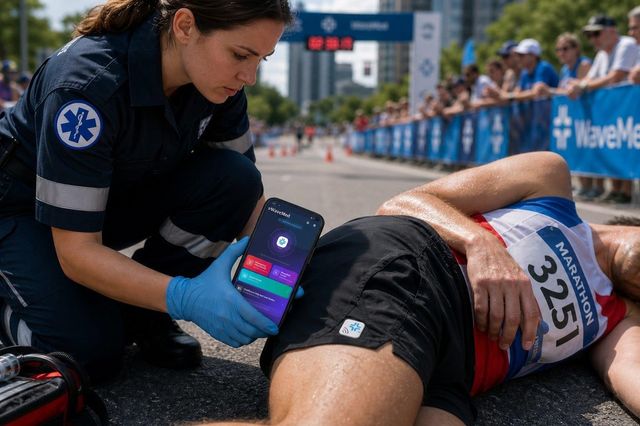
The emergency crew holds a phone running 𝒱WaveMed to the side sticker and confirms the same details in one second; it reads and changes nothing. They set off for the nearest hospital with an emergency room, already knowing about the insulin, and call her brother on the number from the patch to give him the hospital's name.
- Next day
Sara opens her travel insurance certificate from the document folder to start the claim and photographs her grazes in the app with the date. She finds the nearest pharmacy in the app, gets there with a local ride service that opens with the destination already filled in, and shows the pharmacist her usual medicine in Thai with Medicine Finder.
Where anyone looks first, in the language of whoever finds you
- On the gear a rider always wears: sticker patches on the back and side of the helmet, iron-on patches on the glove back and jacket cuff in case the helmet comes off, and one on the bike key. A silicone body with a sealed chip gives two layers of waterproofing against rain and sweat.
- One second, in the reader's language: anyone nearby holds a current smartphone to the blue cross, and your blood type, allergies, current medication, diabetes emergency information and emergency contacts appear. Vietnamese, Thai, Indonesian and Malay are among the 27 languages. No battery, no internet, no login.
- Read-only for responders, yours to change: 𝒱WaveMed, for paramedics, emergency responders and fire crews, reads the patch and cannot change anything. The information is encrypted inside the patch, holds only what you chose, and only your four-digit PIN updates it.
- Right after a crash, the WaveMed app: nearby medical centres with emergency rooms marked, the local emergency number (Vietnam 115, Thailand 1669), a satellite map to verify and share exactly where you are, and local ride services in around 60 countries that open with the hospital already filled in.
- Papers and medicine on a foreign road: travel insurance certificates open full-screen from the document folder, injury photos taken in the app keep their date, the emergency report switches to any of 27 languages on the spot, and Medicine Finder shows your medicine in the local language with its INN.
Helmet, gloves and bike key: the places anyone looks first
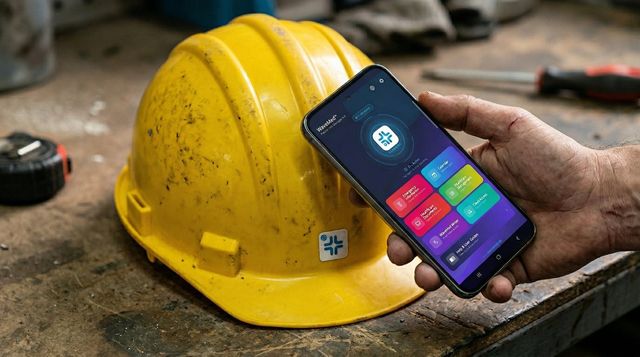
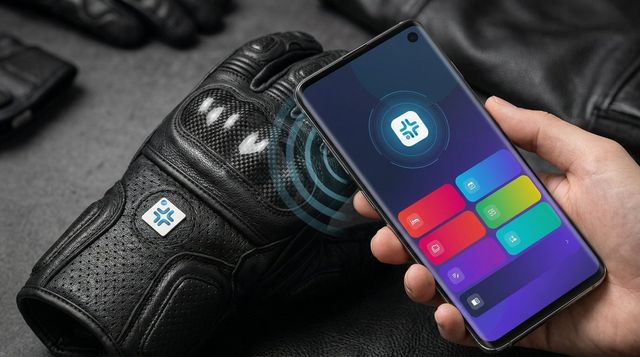
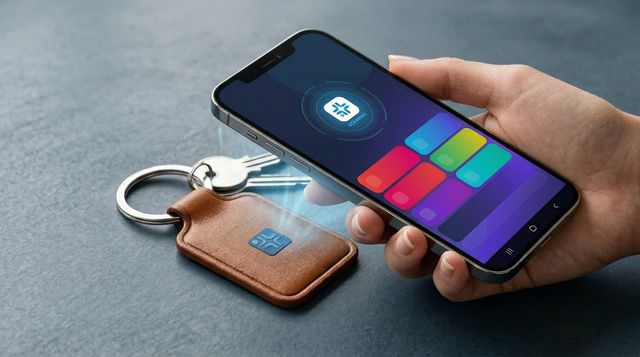
After the crash, on a foreign road: the free WaveMed app
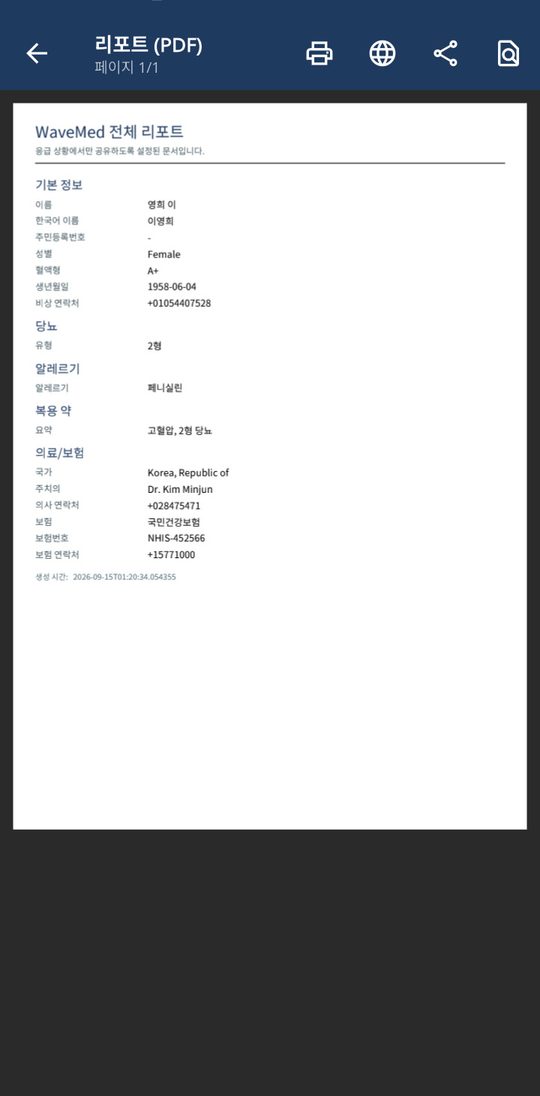
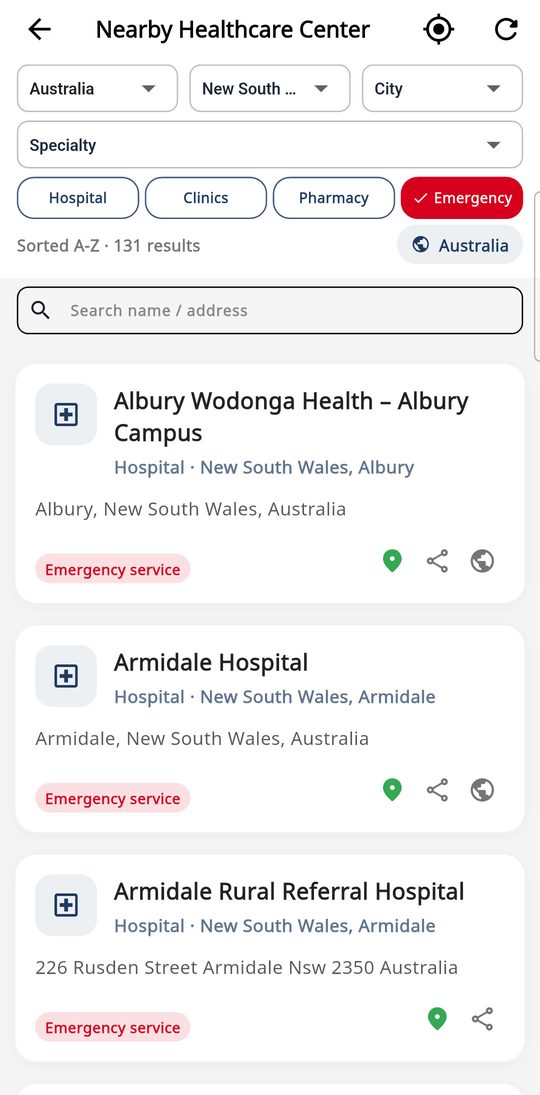
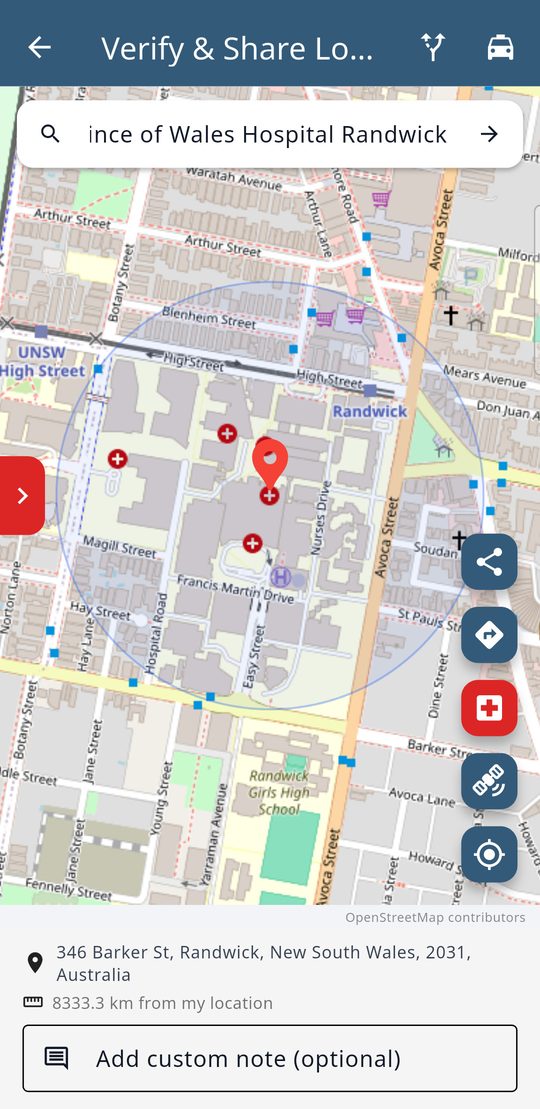
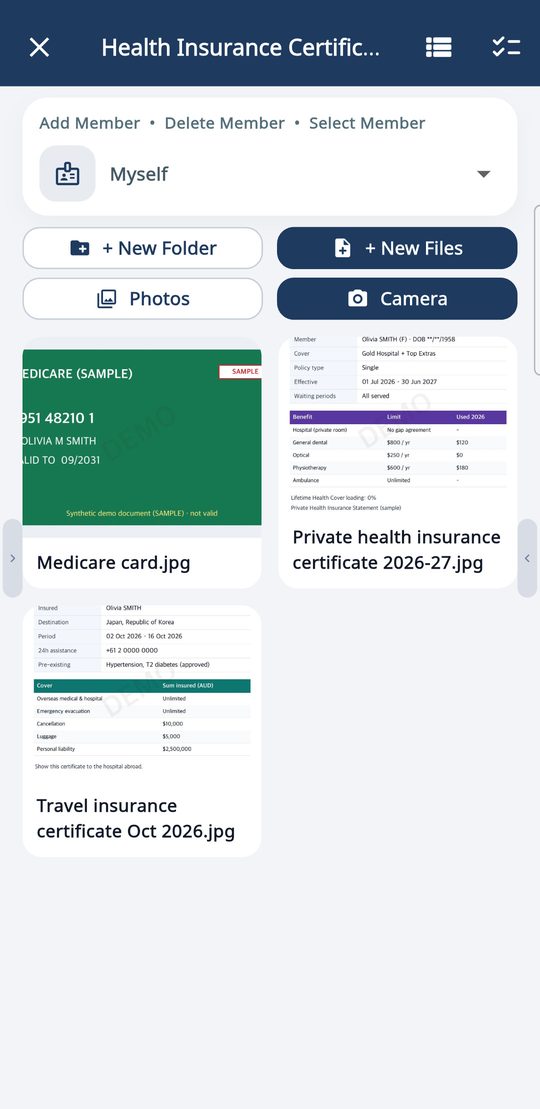
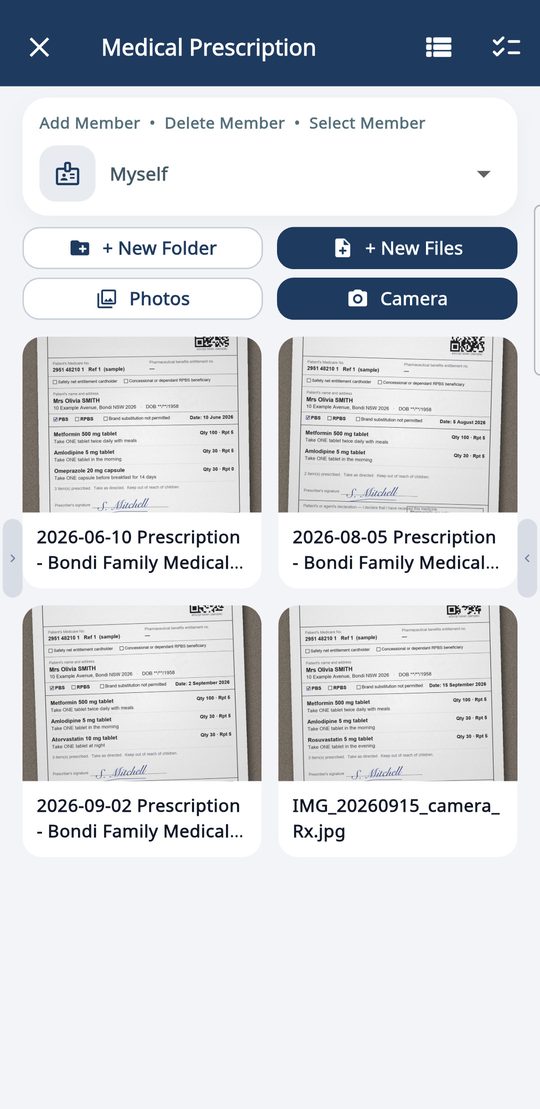
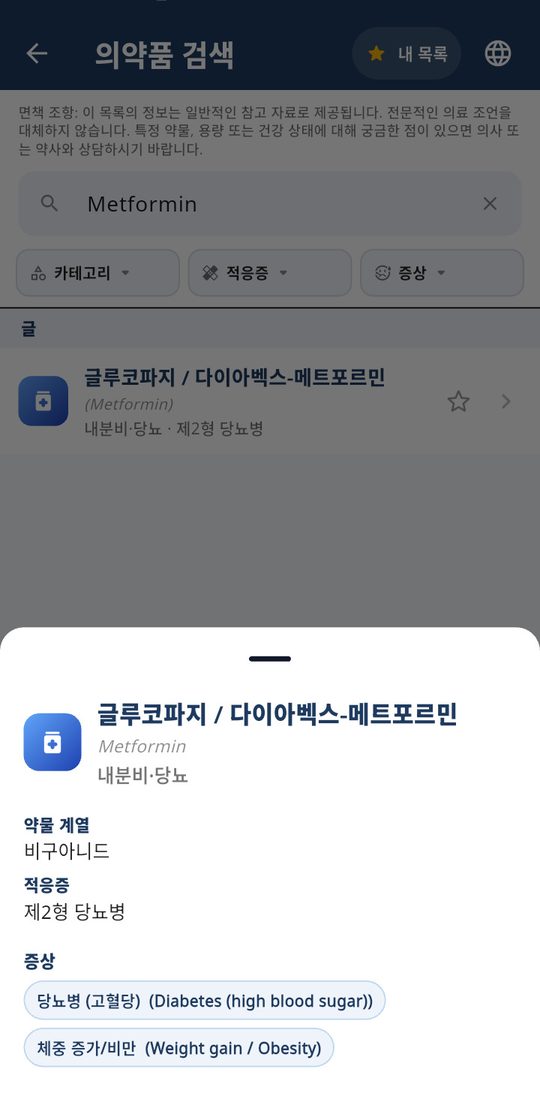
Real WaveMed app screens (demo data).
Where it is read
How to roll it out
- Rental shops hand out RadPatch stickers with every helmet; tourists register in their own language in the free WaveMed app in about three minutes, write their own patch, and erase it with their PIN when they return the helmet (Path A).
- Delivery and ride-hail companies order company-logo helmet stickers for the number of riders or helmets, turning them into a rider safety programme.
- Riders register themselves with the app, or the depot registers riders in list order with WaveMed Desktop and a reader, using the details each rider has agreed to share (Path B).
- Local partners handle supply and training across Southeast Asia; team leaders practise reading a patch with a phone, and riders update their own patch with the PIN whenever their medication changes.
Frequently asked questions
Does it work in Vietnamese and Thai?
Yes. Vietnamese, Thai, Indonesian and Malay are among the 27 languages, shown automatically in the reader's phone language.
What if the helmet comes off in a crash?
That is why riders add iron-on patches on the glove back and jacket cuff, and one on the bike key. Write the same details to each. The silicone body and sealed chip keep out rain and sweat, and with no battery there is nothing to charge.
Can a stranger change or erase my details?
No. Readers can only read, and only what you chose to show in an emergency. Changing or erasing it needs your PIN, and apps outside the WaveMed family cannot open it.
Get the apps
Before you ride tomorrow, start today with the free WaveMed app, and talk to us about logo helmet stickers for your riders or rental fleet.