
The harder a condition is to explain,
the sooner the patch explains it.
When words won't come, the wrist band tells people what to do.
During a seizure, a panic attack, or when words will not come: the diagnosis, what to do, medication and a carer's number are read from the collar or wrist in one second. The smallest preparation that keeps a stranger from panicking.

For people living with epilepsy, autism or a developmental disability, a mental-health condition, a rare disease or a severe allergy, for their carers, and for the support workers, special schools, welfare centres and disability organisations beside them.
In a crisis, the person with the most important information cannot speak
- During an epileptic seizure, sensory overload on the autism spectrum or a panic attack, the person cannot explain, and the people nearby do not know whether to hold them or lay them down. While nobody knows what to do, things get worse.
- Paramedics who do not know the diagnosis give standard treatment, and sometimes it is the wrong one. Which drugs a rare disease rules out, or where the adrenaline pen is, only the person and their carer know.
- Yet nobody wants a diagnosis on show to everyone. It should reach the right person, at the right moment, and no further.
- There are several medicines, and the diagnosis letters and test results keep piling up. Every time a prescription changes, the carer explains it all again from memory.
A subway platform at 5 p.m., on the way home from work
- 07:30
Doyoon, 24, who has epilepsy, marks his morning medication Completed in the WaveMed medication schedule. The waterproof band on his wrist and the RadPatch on his shirt collar carry a note he wrote with his mother: “Do not hold me down. Turn me on my side. Call an ambulance after five minutes.”
- 17:02
A seizure starts on the platform. A crowd gathers and someone calls an ambulance, but some reach to pin his arms while others just watch from a distance.
- 17:03
A station attendant runs over, opens the free WaveMed app and holds his phone to the blue cross on the wrist band for one second: epilepsy, the note, medication, his mother's number. He stops the hands holding Doyoon down, turns him on his side and starts timing.
- 17:20
The seizure stops after three minutes. The attendant calls Doyoon's mother on the number shown on screen and gives the emergency services the name of his medication. The paramedics arrive already knowing it, and read the same patch again with 𝒱WaveMed to check.
- That night
Doyoon photographs the elbow he grazed in the fall with the in-app camera, so it sits in his record with the date, and marks his evening dose Completed. At his mother's suggestion he adds his younger brother as a second emergency contact, then reads the wrist band and the collar patch in turn, enters his PIN and updates both.
The patch says what they cannot, and only as much as they chose
- What to do, before the diagnosis: alongside the diagnosis goes a note such as “during a seizure, do this”, the medication and a carer's number. For epilepsy, the steps and the drug name; for autism and developmental disability, how to calm the person; for mental health, a crisis note and the counsellor's number; for a rare disease or severe allergy, contraindicated drugs and where the adrenaline pen is.
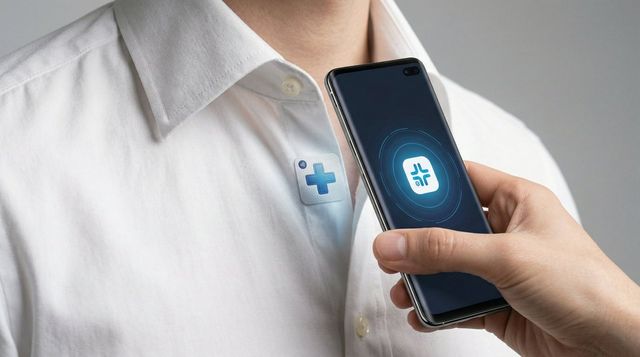
- One second, in the reader's language: a station attendant or a teacher holds a current smartphone to the blue cross for one second and the information appears. No battery, no internet, no login. Items chosen from a list show in the reader's own language, in any of 27 languages; a note typed by hand stays exactly as written, so write it in the language of the people likely to be nearby. 𝒱WaveMed, for paramedics, emergency responders and fire crews, reads the same patch and cannot change anything.
- The person and their carer decide what goes in: the information is encrypted inside the patch and holds only what they chose; changing or erasing it needs the four-digit PIN, and apps outside the WaveMed family cannot open it. If a diagnosis feels too personal, enter only the instructions.
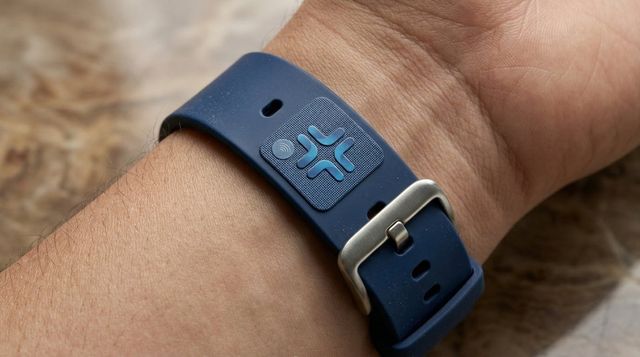
- Places that stay on the body: a thin, flexible, 25 × 25 mm patch sits on a waterproof wrist band or is ironed onto a shirt collar or an everyday T-shirt. It survives water, sweat and the washing machine, and every patch carries the same information.
- The free WaveMed app, shared with the carer: separate records for each family member on one phone and a medication schedule with reminders and Completed marks. Diagnosis letters and test results go into a document folder, and paper prescriptions or an injury are photographed with the in-app camera and kept with the date. Medication records come together on the full dashboard's date-ordered timeline and export as a PDF. Out and about, the satellite map shares the current location with family, and the emergency report switches language on the spot.
A wrist band, a shirt collar, an everyday T-shirt: places a stranger finds at once

Medication, papers and photos, kept together by the person and their carer in the free WaveMed app
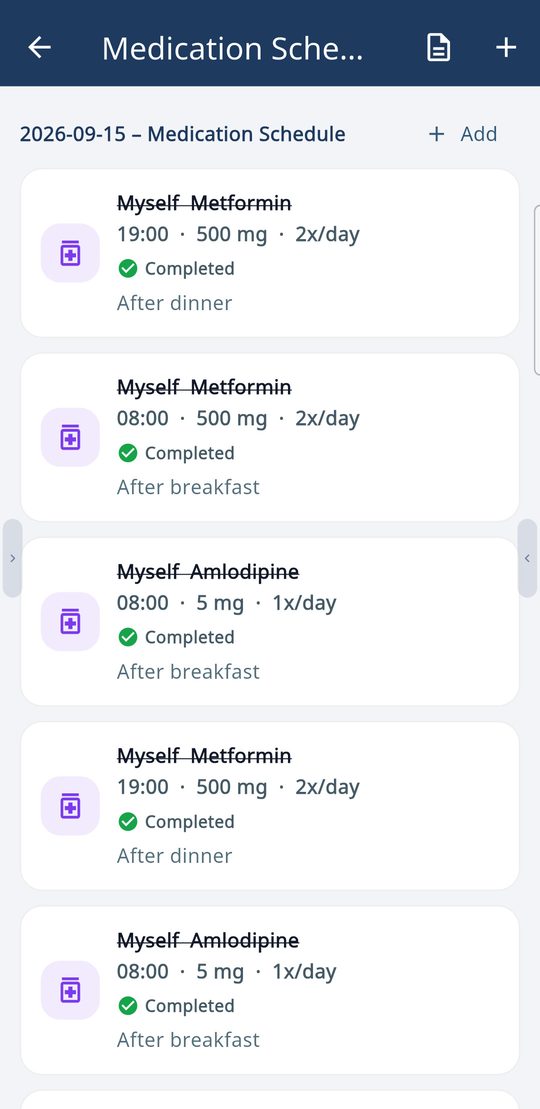
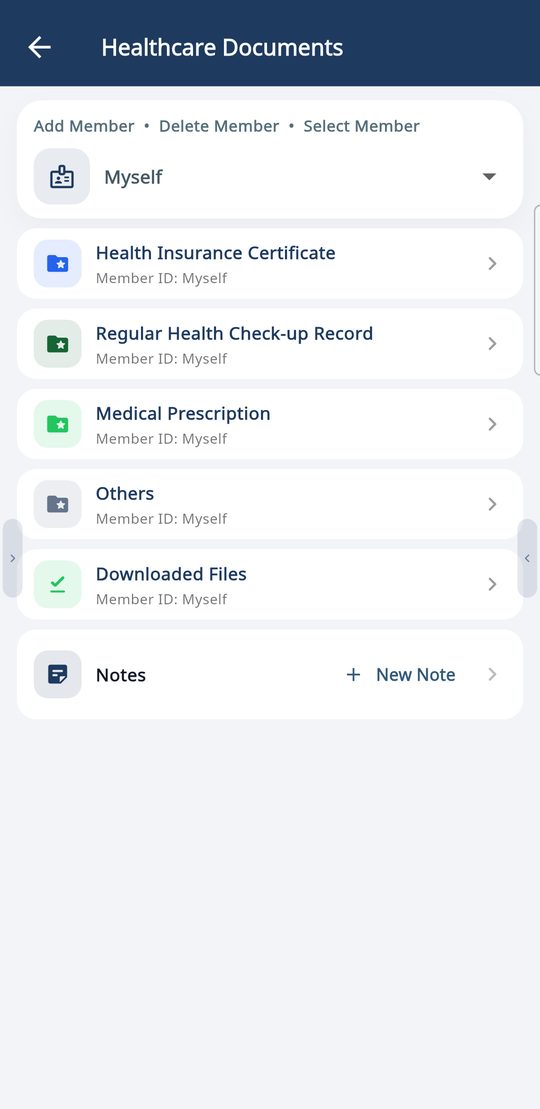
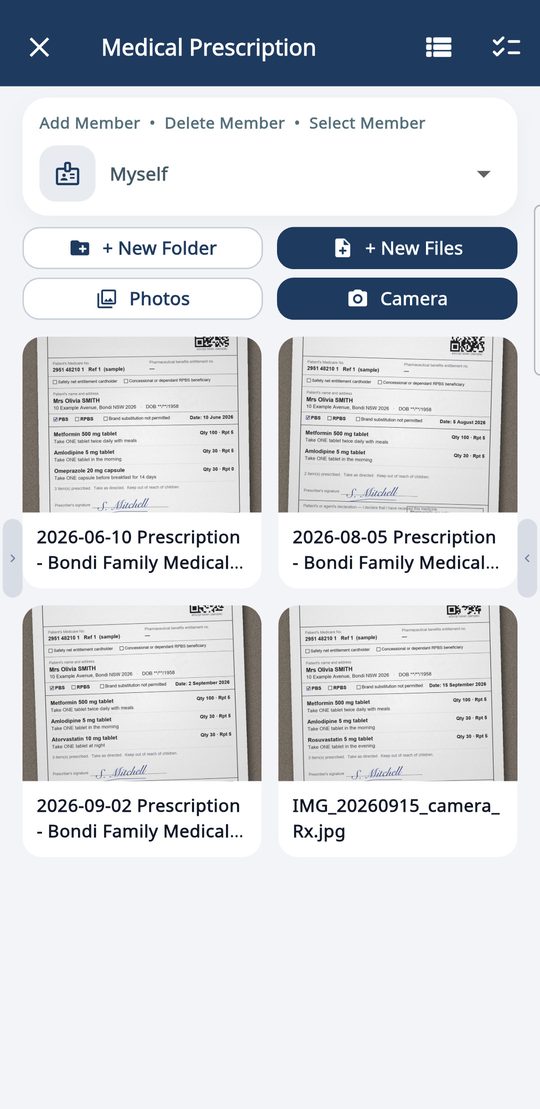
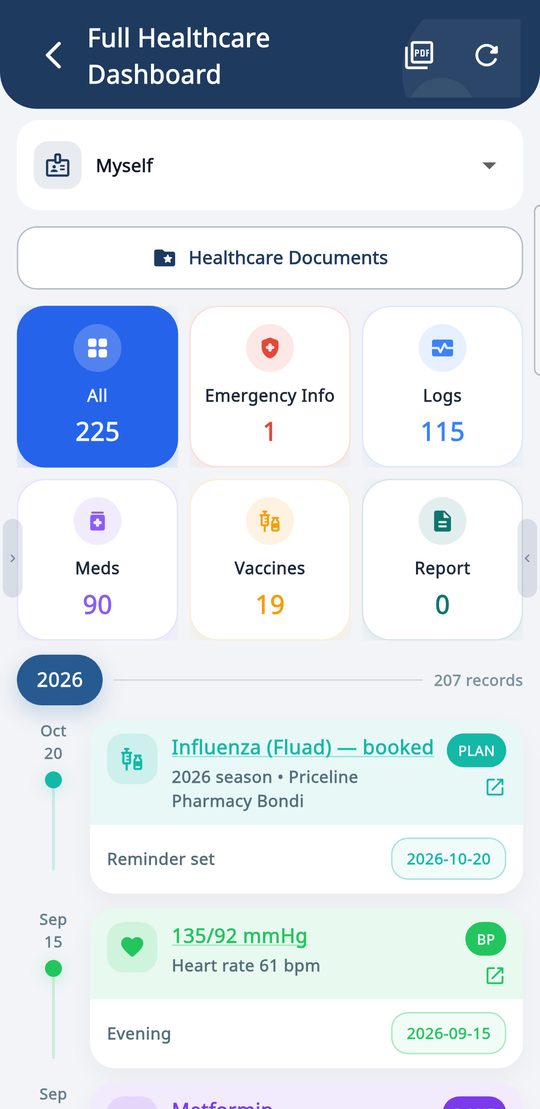
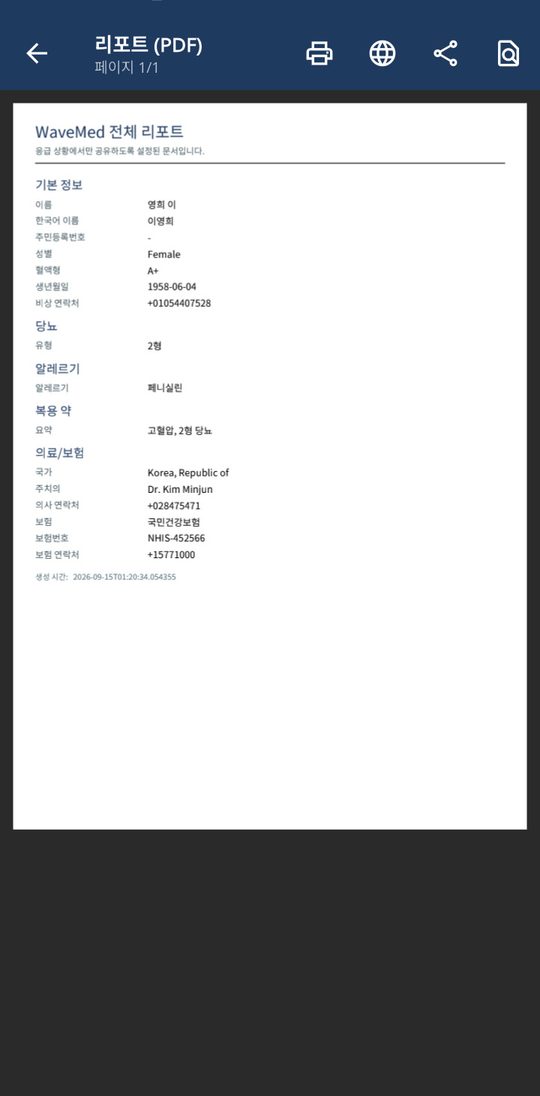
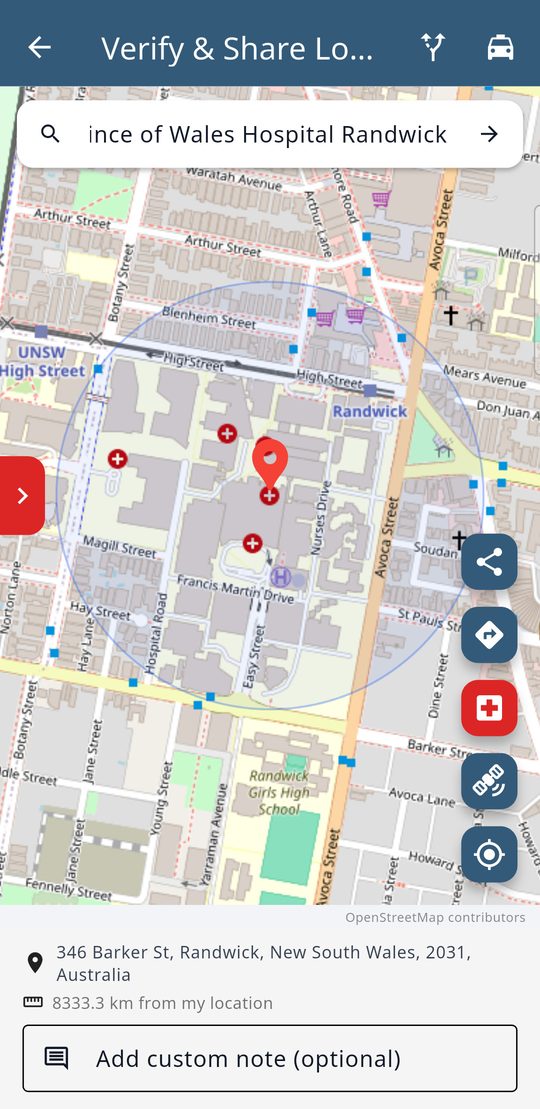
Real WaveMed app screens (demo data).
Where it is read



How to roll it out
- Individuals and carers: install the free WaveMed app, create the record, decide together whether to include the diagnosis and what the ‘what to do’ note says, write it to the wrist band and iron-on patches, and note the PIN (Path A).
- Welfare centres, special schools and disability organisations: start with a pilot at one centre. Prepare wrist bands and iron-on patches, register people in list order with WaveMed Desktop and a reader, and give staff thirty minutes of training (Path B).
- We build the carer consent form and a guide to writing the ‘what to do’ note together, so each person's patch holds only what they and their carer agreed to.
- Support workers and teachers learn to read a patch with the free app, and the programme then extends across the district.
Frequently asked questions
I am uneasy about anyone seeing the diagnosis.
You and your carer decide what goes in. Instead of a diagnosis you can enter only the instruction, such as “turn me on my side during a seizure”.
What if my child finds the wrist band uncomfortable or pulls it off?
Use iron-on patches on a shirt collar or an everyday T-shirt as well. The patch is thin, flexible and 25 × 25 mm, it survives the washing machine, and every patch carries the same information.
What happens when the medication changes?
Read the patch with the WaveMed app, enter the four-digit PIN and update it with the new medicine. Readers can only read, so nobody can change it without the PIN.
Get the apps
Get ready for the moments that are hard to explain: start today by writing a ‘what to do’ note in the free WaveMed app. Welfare centres, special schools and disability organisations: talk to us about a pilot.