
Alone at home,
but never alone.
When Dad can't list his eight medicines, his watch strap can.
A parent on eight medications, a senior living alone, blood pressure and diabetes to manage. Put RadPatch on the watch strap, collar or house keys, and if they collapse, the medication list and the children's numbers appear on the finder's phone in one second.

For seniors who live alone or take several medications, the sons and daughters who keep their records while living elsewhere, and the senior centres, care providers and local governments who look after them.
Emergencies in old age happen when nobody else is there
- Most emergencies in old age happen at home or in the neighbourhood, when the person is alone, and the phone is often in another room or still on the charger.
- The neighbour or passer-by who finds them does not know which medication they take, whether blood-pressure pills are combined with an anticoagulant, or where the children live.
- The list keeps growing and changing: prescriptions from different hospitals and pharmacies, doses adjusted after appointments. It is the first thing the emergency room asks, and the most often wrong.
- The children who keep track live elsewhere, and many parents do not use a smartphone. The up-to-date list lives in a daughter's memory, a pharmacy bag and a drawer.
A Wednesday morning walk
- Sunday 16:00
On her weekly Sunday visit, Sua finds a new prescription in her father's pharmacy bag. Dong-su is 81, lives alone and now takes eight medicines. She photographs the prescription into his record in her own WaveMed, adds the new dose to his medication schedule, then reads the patch on his watch strap and updates the medication list with the PIN.
- Wednesday 07:50
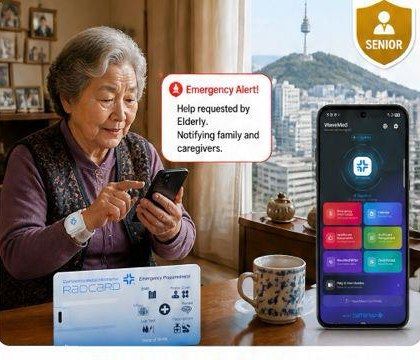
On his morning walk Dong-su feels faint, sits down on a bench and cannot answer a passer-by clearly. His phone is at home on the charger. The passer-by calls for an ambulance.
- 08:02
The paramedic holds a phone running 𝒱WaveMed to the blue cross on the watch strap for one second: blood-pressure medication, an anticoagulant, diabetes emergency information, his daughter's number. It reads, and changes nothing. Before Dong-su can say a word, the crew knows what to prepare for.
- 08:10
Sua's phone rings at work: the crew gives her the hospital's name. In WaveMed she drops a pin on the hospital, and the ride app opens with the destination already filled in.
- 19:30
Nobody had to guess what Dong-su takes: the list the crew read was the one Sua updated on Sunday. That evening she photographs the hospital's papers into his documents folder, next to this year's check-up results.
A record on the parent's wrist, kept current by the children
- Where it is always worn: a 25 × 25 mm RadPatch on the watch strap, inside the coat collar or on the house keys. There is no battery to charge, and a silicone body with a sealed chip gives two layers of waterproofing, so the shower and the washing machine are fine.
- Readable by whoever finds them: a neighbour, a building caretaker, a care worker or a paramedic holds any current smartphone with the free app to the blue cross for one second. Medication, allergies, diabetes emergency information and the children's numbers appear in the reader's language, in any of 27 languages, with no internet.
- Read-only for responders, changed only with the PIN: 𝒱WaveMed, for paramedics, emergency responders and fire crews, reads and changes nothing. The information is encrypted inside the patch, holds only what the family chose, and is updated with a four-digit PIN on the next visit.
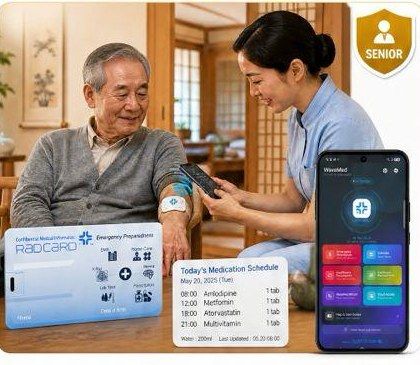
- The parent's own record on the child's phone: in the free WaveMed app, add the parent under My Family and keep their records apart from your own. A medication schedule with reminders and Completed marks, prescriptions photographed with the camera, and one folder a year for check-up results.
- Trends, not memories: blood pressure and heart rate draw a 30-day trend with notes such as “morning, seated”; blood sugar shows mg/dL and mmol/L together. The Full Healthcare Dashboard puts medication, logs and vaccines on one dated timeline that exports as a PDF.
Watch strap, collar, house keys: the three things a parent never leaves home without
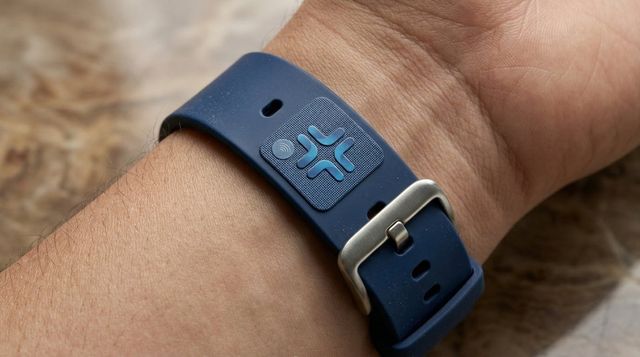
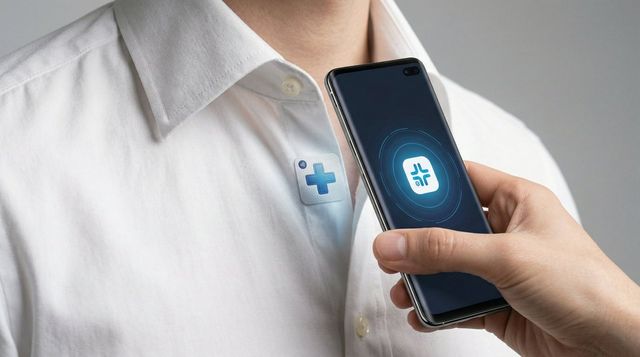
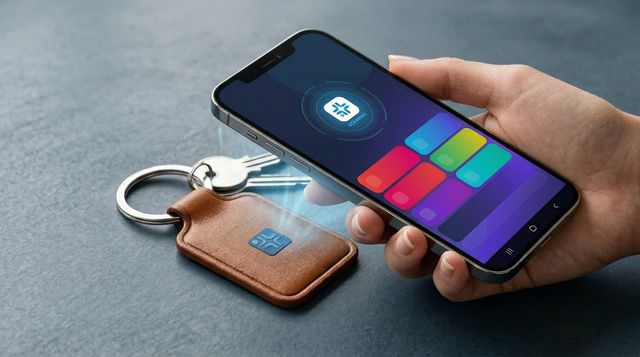
Eight medicines on one screen: the free WaveMed app, kept by the children
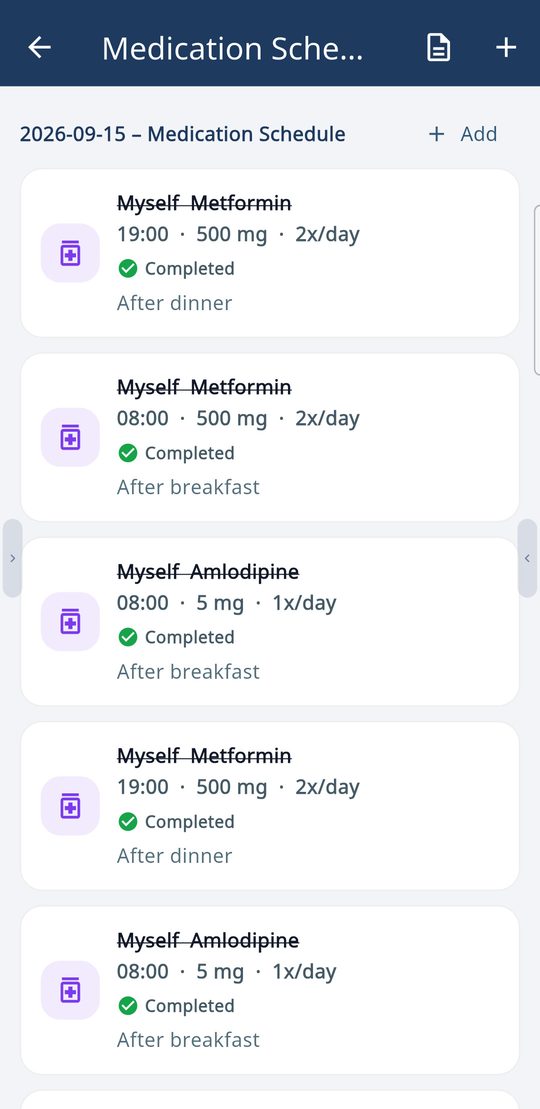
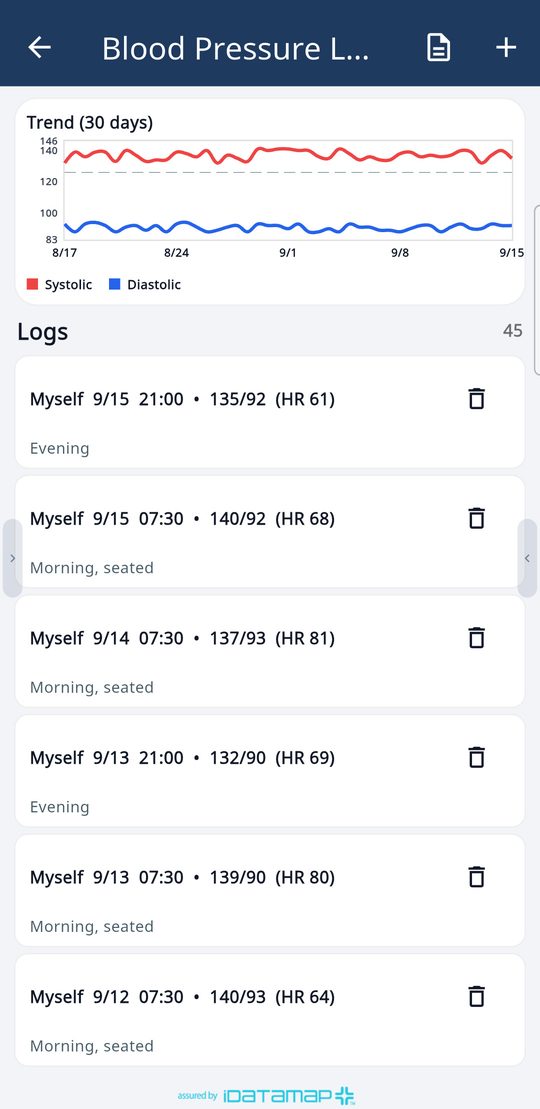
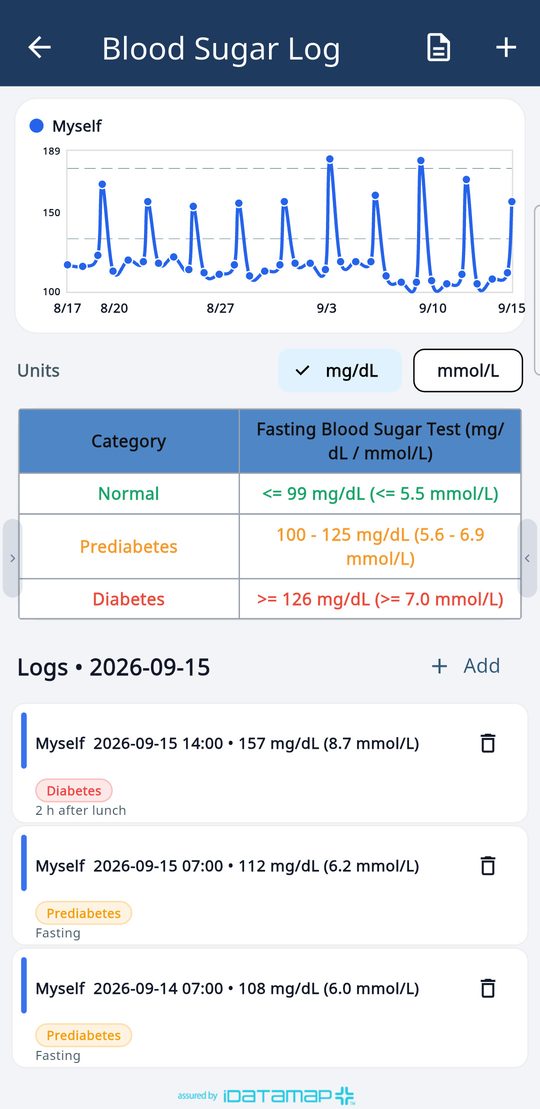
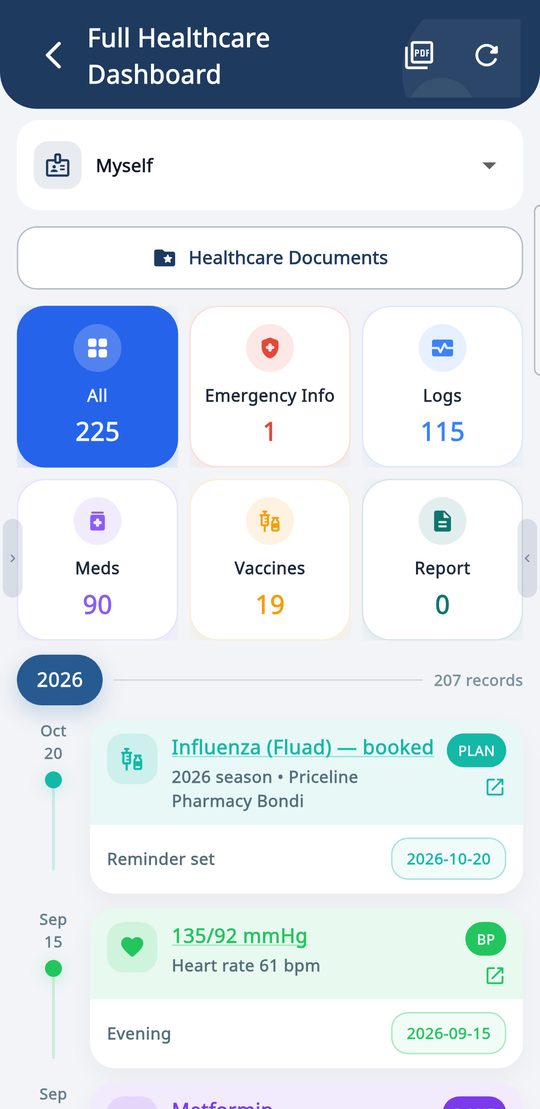
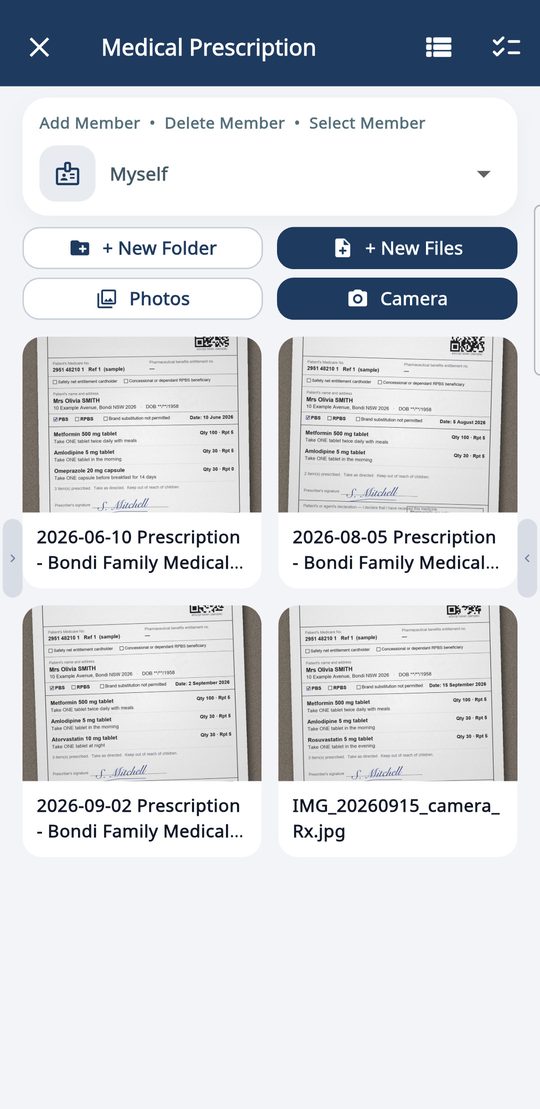

Real WaveMed app screens (demo data).
Where it is read

How to roll it out
- Families (Path A): a son or daughter installs the free WaveMed app, adds the parent as a family member, enters only what they choose, writes the patch on the next visit and keeps the PIN. The parent simply wears it.
- Senior centres and local governments (Path B): start with one senior centre, with watch-strap bands, WaveMed Desktop and a reader, and thirty minutes of staff training. Members are registered in list order, with the centre and social-worker numbers included.
- Build the family consent form and registration guide together, and brief neighbours, building caretakers and care workers on reading with the free app.
- After a season, compile the fall and emergency cases and extend across the district.
Frequently asked questions
What if my parent cannot use a smartphone?
That is fine. A child or care worker registers on their behalf; the senior only wears it. Reading is done on the finder's phone.
Can a stranger read my parent's private information?
The patch holds only what the family chose to show in an emergency. Changing or erasing it needs the four-digit PIN, and apps other than the WaveMed family cannot open it. The full record, prescriptions and check-up results included, stays in the app.
The medicines change often. How do we keep the patch current?
On your next visit, or whenever a dose changes, read the patch in WaveMed, enter the PIN and update the medication list. Put the new schedule into your parent's record in the app, and the reminders follow.
Get the apps
Start your parent's record in the free WaveMed app on your next visit, and talk to us about a pilot for your senior centre, care service or district.