The ER's first questions,
answered by a patch in one second.
Written on the ward at discharge. Read in the ER at 2 a.m.
Identity, blood type, allergies and medication, read from the patch on the patient's body the moment they arrive. In pilot use, admission time fell from 8.2 minutes to 1.8.

For hospitals and emergency departments that receive unconscious patients, patients from abroad and elderly patients who arrive alone.
The same four questions, every shift
- Who are you, what is your blood type, any allergies, what do you take? From an unconscious patient, those answers take eight minutes on average.
- A patient from abroad may not share your language, and the medicine they take at home goes by a different name here.
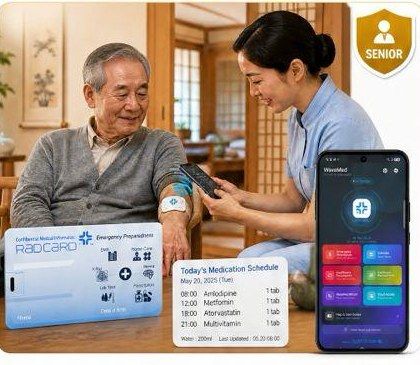
- Elderly patients are often brought in alone, and the family you finally reach may not know the names or doses of their medicines.
- The papers and prescriptions handed over at discharge scatter, so at the next visit or transfer the same questions start again from zero.
Day 41 after discharge, 2:12 a.m. in the ER
- Discharge day
Mr Kang, 74, goes home. With WaveMed Desktop and a reader, the ward writes the items he chose (blood type AB+, the anticoagulant he has just started, a contrast allergy, his son's number) to a patch and fixes it to his watch strap. His son photographs the discharge papers and prescription into WaveMed.
- Day 41 · 01:58
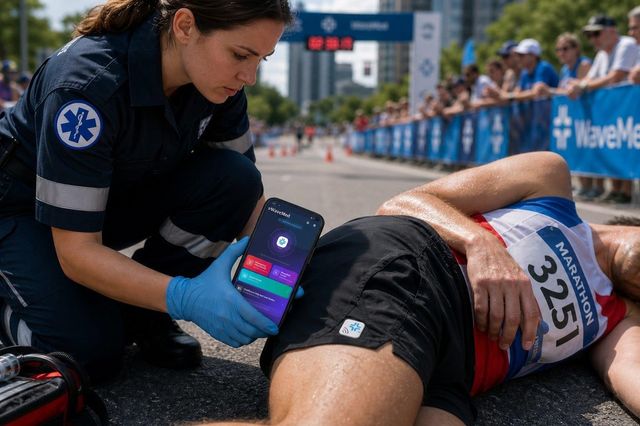
A road accident at night. Mr Kang is unconscious, with no ID and no one with him. A paramedic spots the blue cross on the watch strap and reads the patch in one second with 𝒱WaveMed.
- 02:12
He arrives in the ER. The triage nurse holds a phone to the same patch. No login, no hospital system, no internet: name, date of birth, AB+, anticoagulant, contrast allergy and his son's number on one screen.
- 02:13
Treatment direction is set. The contrast allergy is known before any scan is ordered, and his son is called on the number from the patch.
- 02:40
The surgical team prepared knowing about the anticoagulant. The eight minutes once spent asking and waiting went into treatment.
One RadPatch on the patient, one phone at triage
- One-second triage: hold a phone to the patch and blood type, allergies, medication, diabetes emergency information and emergency contacts appear. The free, read-only 𝒱WaveMed app for paramedics, emergency responders and fire crews works at your triage desk too: no login, no system access, no internet, and nothing can be changed. In pilot use, identification errors fell by 92%.
- Issue at discharge: WaveMed Desktop Intelligent Manager and a reader write hundreds of patches in list order from a single CSV. The patch is read as is at the next visit or on transfer.
- Patients from abroad: information stored in the patient's language is shown in the reader's, across 27 languages. The WaveMed emergency report switches language on the spot, and Medicine Finder shows every medicine with its English INN, so a home-country brand can be matched.
- Once home: in the free WaveMed app patients import the discharge PDF, photograph prescriptions, mark each dose Completed on a medication schedule with reminders, and log blood pressure and heart rate as a 30-day trend. Carers keep each family member's record apart.
- No central store to leak: only what the patient chooses goes in, encrypted inside the patch, changed only with a four-digit PIN, and only genuine patches can be written. Nothing accumulates on hospital servers.
Where patients carry it: wrist band, gown collar, phone case
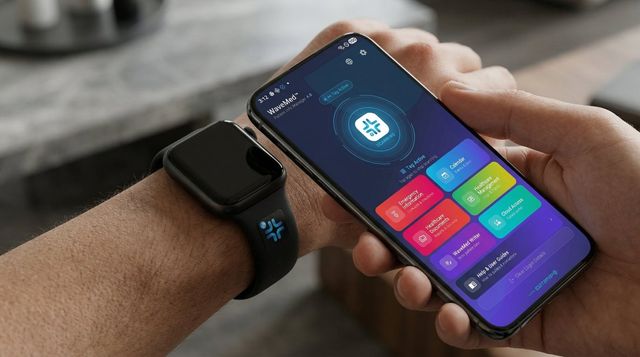
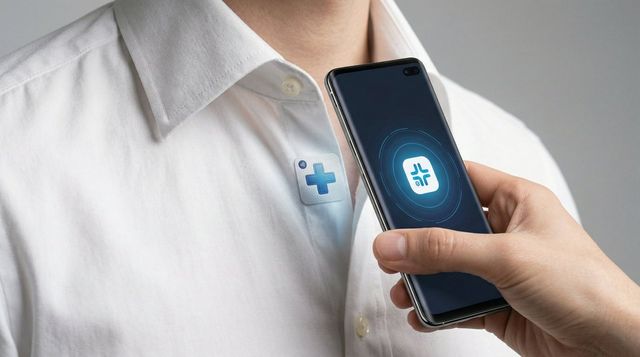
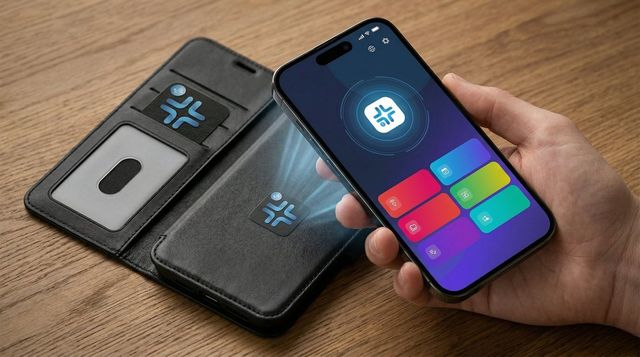
After discharge, the record stays in the patient's hands
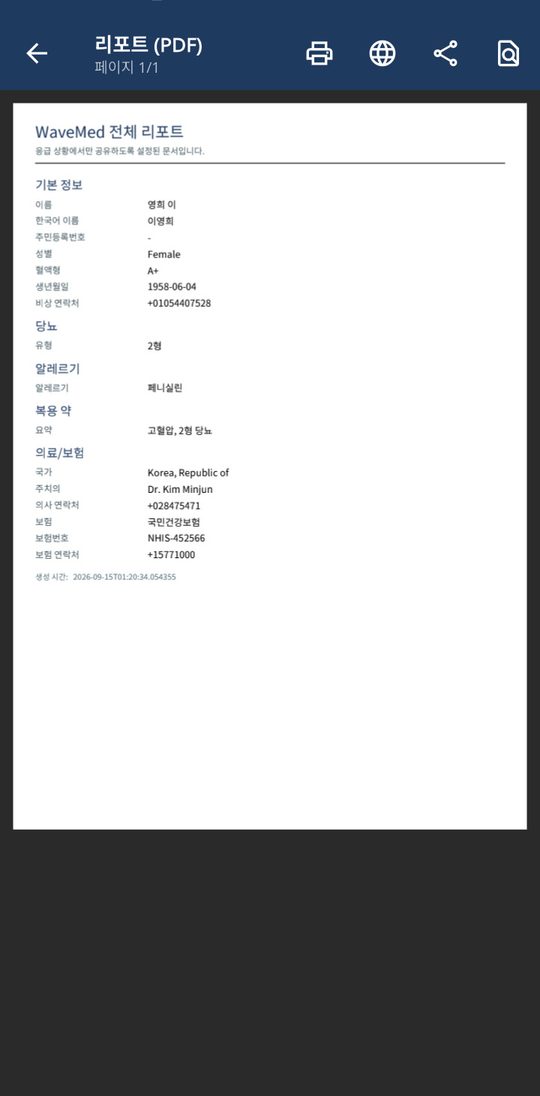
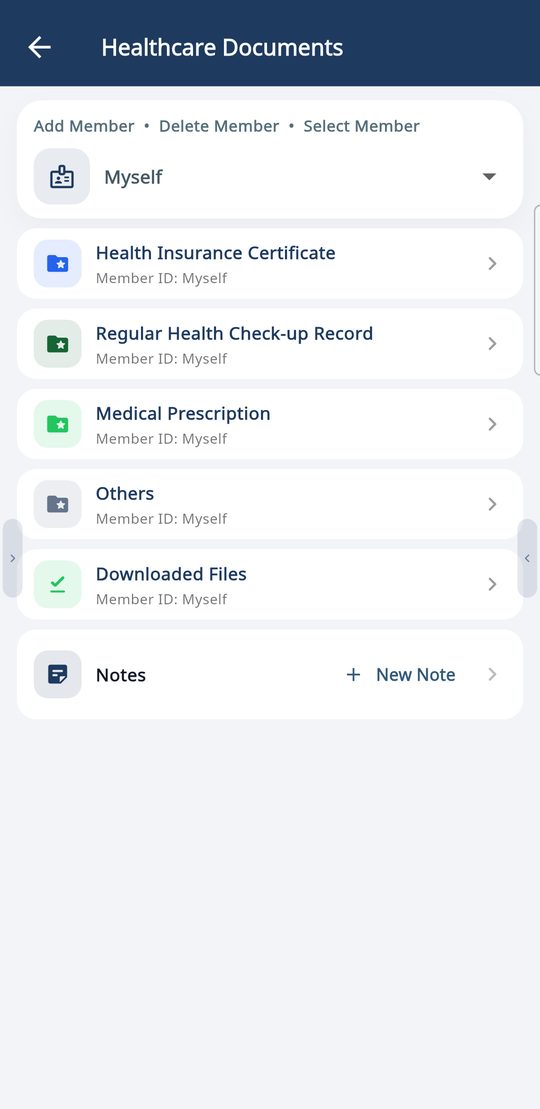
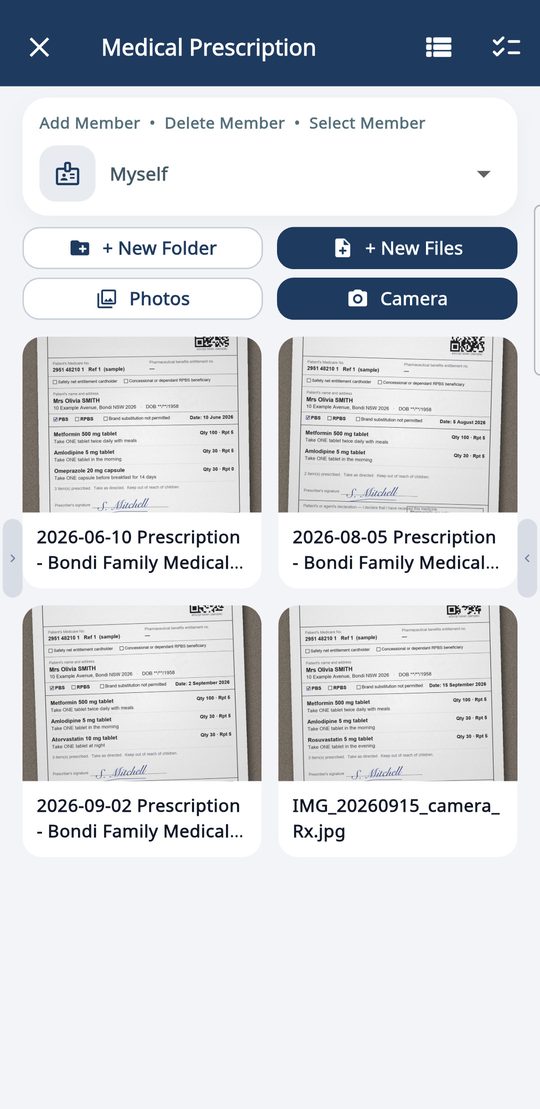
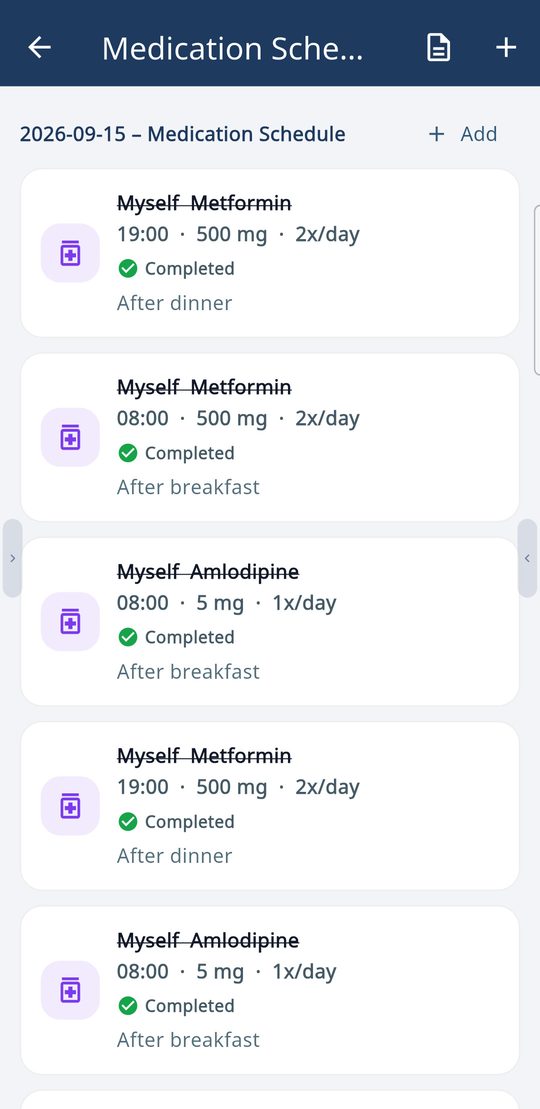
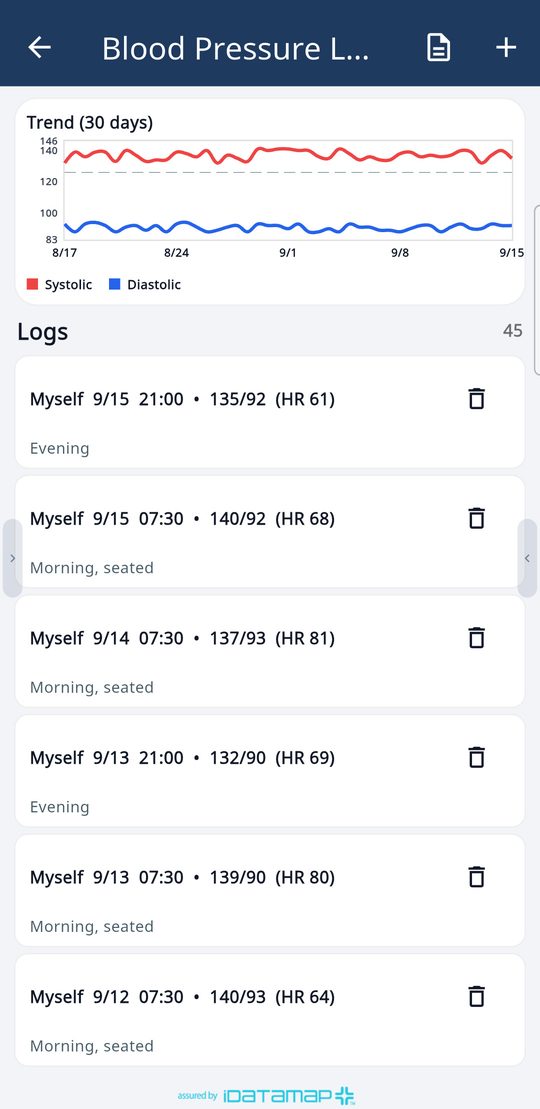
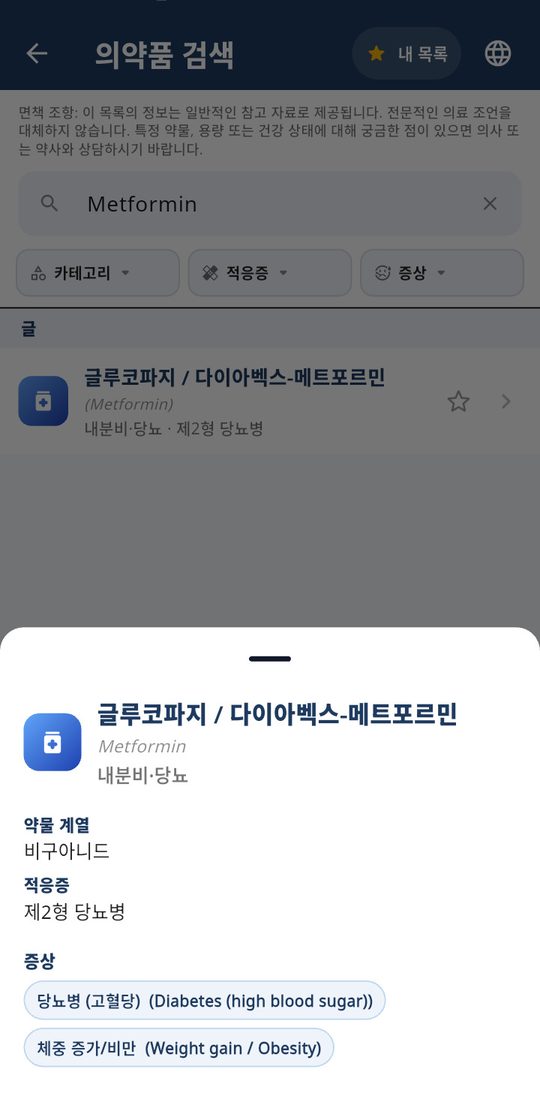
Real WaveMed app screens (demo data).
Where it is read

How to roll it out
- Pilot: one emergency department for three months, measuring admission time and identification errors. Triage needs only a current smartphone with the free 𝒱WaveMed app.
- Path B: we provide WaveMed Desktop, a reader and the first batch of patches; the ward writes patches for discharged patients from a CSV list.
- Path A: outpatients and carers register themselves in the free WaveMed app (no account) and, when medication changes, read the patch, enter the PIN and update it.
- The results set the scope of inpatient issue and of optional HL7/FHIR integration with your HIS and EMR.
Frequently asked questions
Does patient information pile up on our servers?
No. The patient chooses what goes into the patch and carries it on their body, encrypted. Nothing accumulates on hospital servers, so there is no central store to leak, and apps outside the WaveMed family cannot open it.
Do we need HIS or EMR integration, or special equipment, to start?
No. HL7/FHIR integration is available but not required. Triage starts with any current smartphone (most Android phones on 8.0 or newer, and recent iPhones) and the free 𝒱WaveMed app. The reader is used when the ward writes patches in bulk with WaveMed Desktop.
A patient from abroad filled in the patch in their own language. Can our staff read it?
Yes. The information is shown in the reader's language, across 27 languages. Items chosen from a list are translated; only notes the patient typed by hand stay as written.
Get the apps
Start with one emergency department for three months, and time those first minutes yourself.