Where signal and hospitals are far,
a colleague's phone is the first aid post.
Twenty minutes from the surface, the nearest first aid post is a colleague's phone.
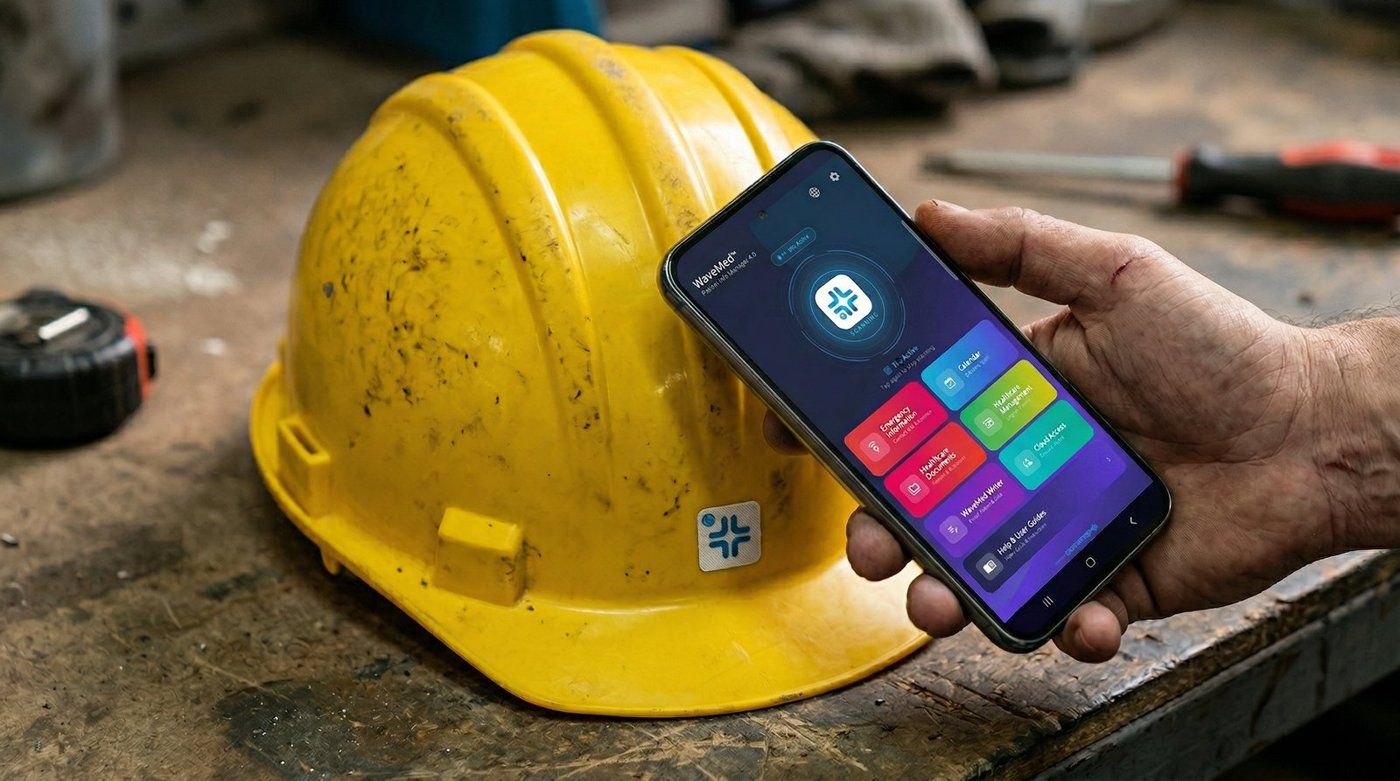
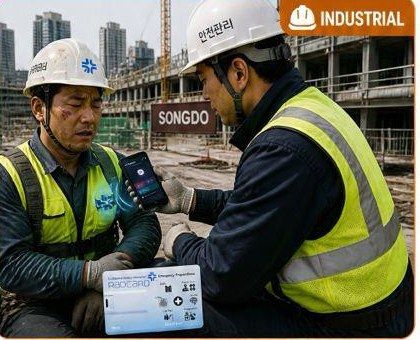
Mine tunnels, offshore platforms, high-rise building sites. When something happens, the nearest person is a colleague. The RadPatch inside the hard hat shows blood type, allergies, medication and the safety officer's number on that colleague's phone in one second, with no internet.
For people working in mines and tunnels, on oil, gas and offshore plants, on construction sites and at military training grounds, and for the safety officers, site medical posts and departments responsible for them.
Accidents happen farthest from the hospital
- Tunnels without signal, platforms far from land, sites more than an hour from a hospital: places no server or cloud can reach at the moment it matters.
- First aid is given by the colleague alongside, not a medic, and the colleague does not know the injured worker's blood type, conditions or medication.
- On a multinational crew, language fails first. A foreign worker struggles to explain their situation, and an unconscious one cannot explain anything at all.
- On a plant or site with no address and no signs, even saying exactly where the accident is becomes the first obstacle.
Tunnel section 2, 10 a.m.
- Day one
Before the first shift, the site medical post writes every worker's patch in list order with WaveMed Desktop and a reader. For Tuấn, who came from Vietnam, the items he agreed to are entered in Vietnamese: blood type A−, on anticoagulants, the safety officer's number and a family number. The patch goes inside his hard hat, and he adds the anticoagulant to the medication schedule in the free WaveMed app.
- 10:20
A rockfall in tunnel section 2 knocks Tuấn unconscious. Twenty minutes to the surface, and no phone signal.
- 10:22
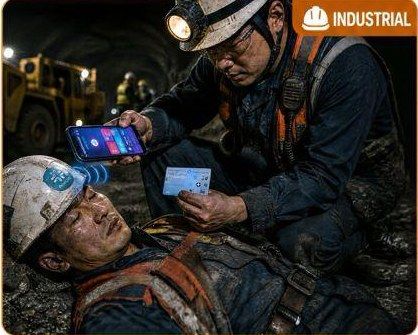
His colleague Minsu holds his own phone, with WaveMed installed, to the blue cross inside the hard hat for one second. With no internet, blood type A−, the anticoagulant and the safety officer's number appear in Minsu's language, Korean. He radios the details to the surface medical post, exactly.
- 10:35
At the tunnel portal there is a weak signal but no street address. The safety officer calls the emergency number, switches the WaveMed map to satellite and sends the pin and coordinates to the paramedics. The medical post, knowing about the anticoagulant, is already prepared for bleeding.
- 10:50
The paramedics confirm the same patch with 𝒱WaveMed in one second; it reads and changes nothing. They leave for hospital already knowing about the anticoagulant, and the safety officer calls Tuấn's family on the family number stored in the patch.
One second inside the hard hat, no internet, in the reader's language
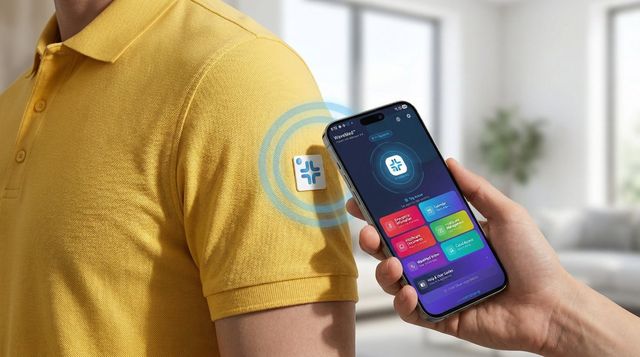
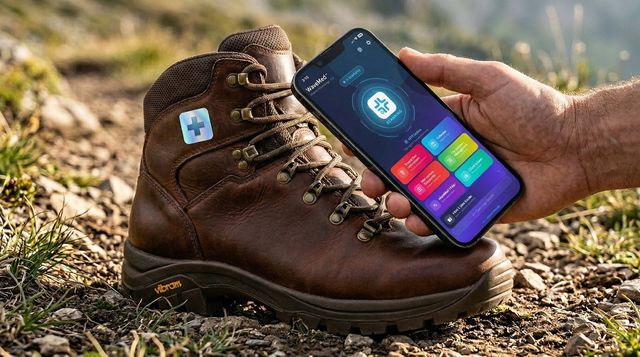
- Where a worker always has it: a sticker inside the hard hat, an iron-on patch on the workwear sleeve or collar, a patch on boots or the phone case, and a wallet-sized RadCard™ in the same data format. A silicone body with a sealed chip gives two layers of waterproofing against sea water, oil, sweat and the washing machine, and placed where it is protected from impact, such as inside the hard hat, it lasts.
- Readable where nothing else reaches: no battery, no internet, no login. Any current smartphone held to the blue cross for one second shows blood type, allergies, current medication, diabetes emergency information and the safety officer's and family's numbers. 𝒱WaveMed, for paramedics, emergency responders and fire crews, reads the same patch and cannot change anything.
- 27 languages for a multinational workforce: each worker registers in their own language, and the information is shown in the reader's language, whether that is a colleague, the site medical post or the local paramedics.
- The worker's information, not the company's: only the details the worker chose are encrypted inside the patch, not on a server. Changing them needs the worker's four-digit PIN, and apps outside the WaveMed family cannot open it. The site medical post registers hundreds of people in list order with WaveMed Desktop and a reader, writing only what each person agreed to.
- The free WaveMed app, before the shift and after an accident: a medication schedule with Completed marks for weeks of rotating shifts, a check-up folder for each year, vaccination records as PDF and insurance certificates for postings overseas. When something happens: satellite location sharing that still sends coordinates and a link on a weak connection, nearby medical centres with emergency rooms marked, ride services in around 60 countries, and an emergency report rebuilt on the spot in any of 27 languages.
Workwear sleeve, boots, phone case: beyond the hard hat, places always on the body

Before the shift and after an accident: the free WaveMed app for workers
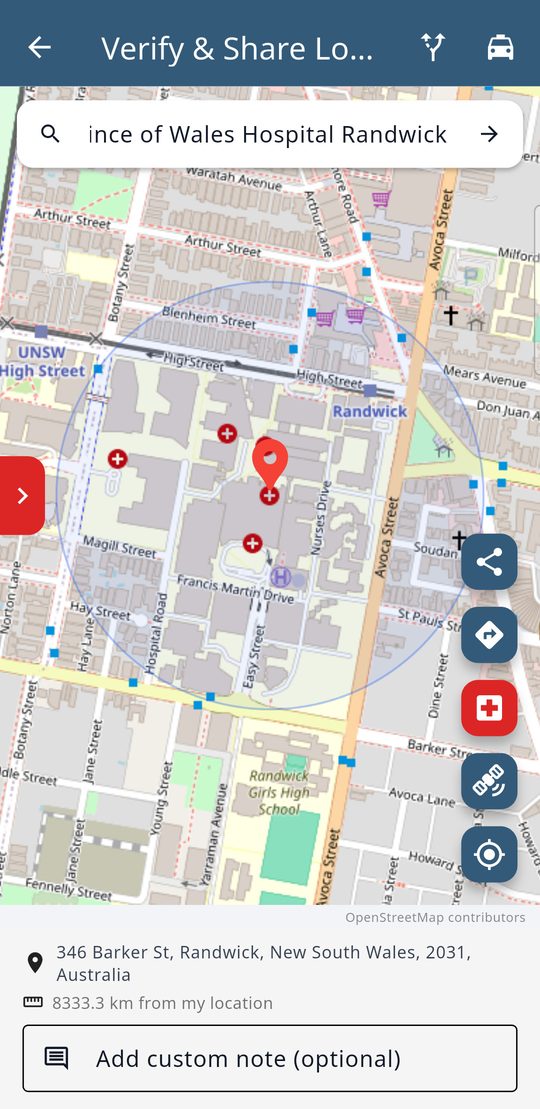
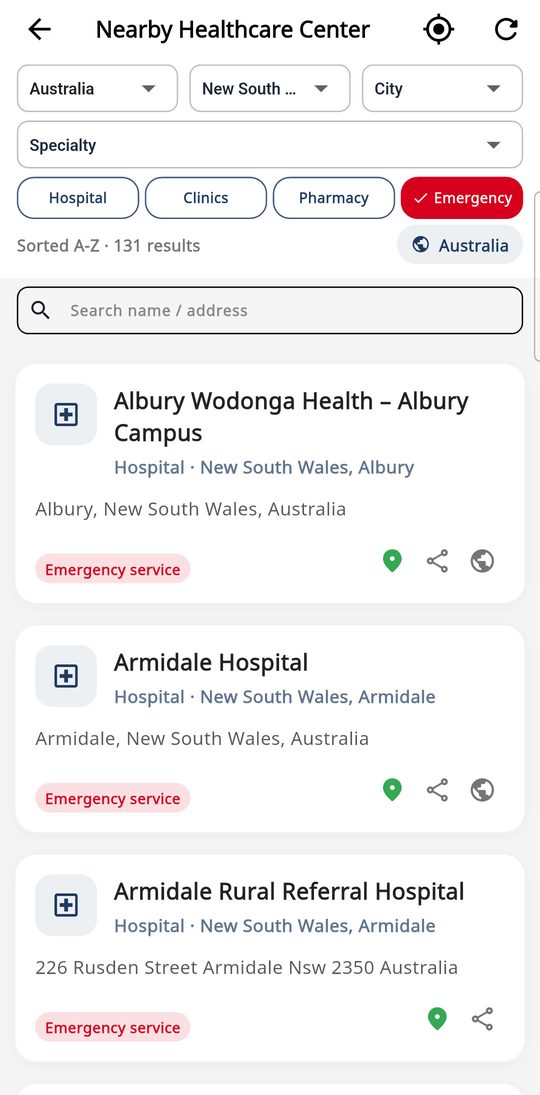
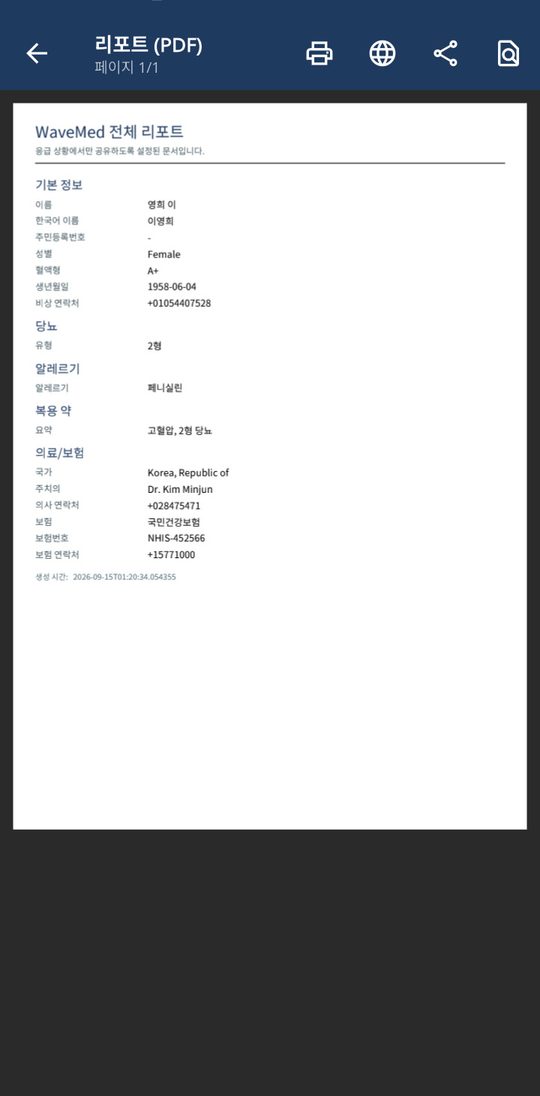
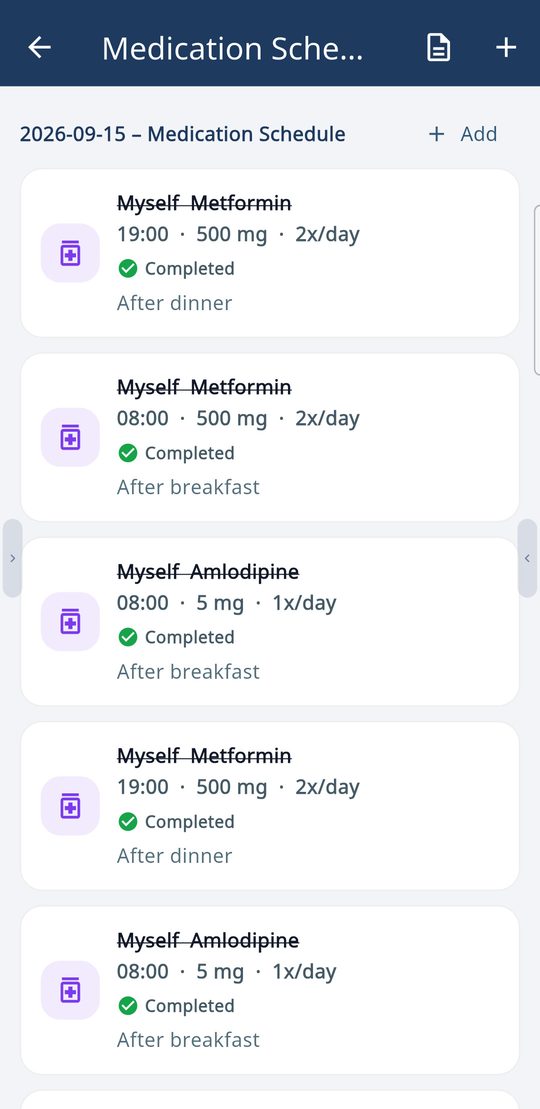

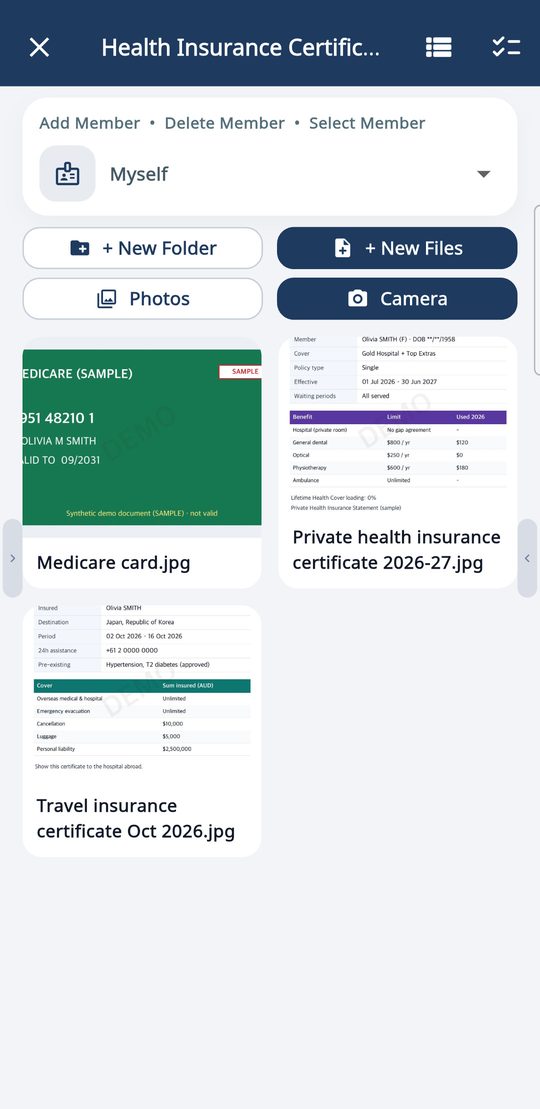
Real WaveMed app screens (demo data).
Where it is read

How to roll it out
- Pilot at one site: prepare hard-hat patches and register every worker in list order with WaveMed Desktop and a reader, writing only the details each person agreed to share and the safety officer's number on every patch. Training for the medical post and safety officers takes thirty minutes (Path B).
- Build a multilingual registration guide together, so foreign workers register in their own language.
- Workers install the free WaveMed app, keep their medication and check-up records, and update their own patch with their PIN when medication changes (Path A).
- At shift or crew changes, the medical post checks and updates the safety officer's number; the response cases from the pilot site are then compiled and the programme extended to every site.
Frequently asked questions
Does it survive sea water, oil and impact?
A silicone body with a sealed chip gives two layers of waterproofing, so sea water, oil and the washing machine are fine. Placed where it is protected from impact, such as inside the hard hat, it lasts.
Can it be read in a tunnel or offshore with no signal?
Yes. It needs no battery and no internet. One current smartphone held to the patch for one second reads it, and even if every server is down, the information is still on the worker's body.
Who controls the health information on a worker's patch?
The worker. The patch holds only what the worker chose, encrypted inside the patch rather than on a server. Changing or erasing it needs the worker's PIN, and reader apps can only read. When the medical post registers workers, it writes only the details each person agreed to.
Get the apps
Start with one site: workers can begin today with the free WaveMed app, and builders, energy companies and the military can talk to us about a hard-hat patch pilot.